Showing posts with label life. Show all posts

Friday, January 10, 2014

Celebrating success

Confession time: I thought I'd be wrapping up 2013 with a big announcement. I had it written in my head. Things were about to happen. Then, in early December, it all fell through. After eight months of back and forth with a wonderful agent, she ultimately decided my work was too similar to those of her existing clients, and, well, it wouldn't behoove any of us for her to take me on.

It was devastating.

But she was right.

Now I'm trying to pick myself up and get my work out there again. It's not easy, not when I'd let myself get so invested. But I need to move on, and what better way to do that than to focus on recent successes!

Thames Festival Firework Display Blackfriars - geograph.org.uk - 40284
by Christine Matthews
I have two new stories out in Science News for Students:

Caught in the act looks at how animals adapt to a rapidly changing world. Humans are changing the world faster than ever (in fact, we are now considered to be THE driving force of change on the planet, the focus of another story that should be out in a month or two), and only animals that can adapt in time will be able to survive the transition. "Caught in the act" provides some hope on that front.

Why are bees vanishing?, out today, examines the latest scientific findings that are unraveling the mystery of colony collapse disorder. With one-third of the food on our tables requiring pollination by bees and other pollinators, their disappearance is nothing to ignore. And pesticide use--around the home and garden--might be a major culprit, even when used in moderation. You can find out better ways to control pests in my explainer, How to limit the need for pesticides.

Things are moving forward. As they should.

What successes are you celebrating?

Monday, September 9, 2013

Unexpected finds

Look what we found!


Nothing quite like finding nature in the middle of a football stadium (that doesn't even have a grass field). Or maybe I should say nature found us--my husband scooped this no-so-little guy out of the air as it flew overhead.


Monday, July 1, 2013

An ounce of prevention

I used to be a beekeeper. So when I learned about the 50,000 dead bumble bees in Oregon, I was disturbed. But not just because of my affinity for bees. I'm currently teaching an environmental psychology class, and we just wrapped up a unit on biopsychology and neuropsychology--the study of how internal body processes and brain function affect behavior. We specifically looked at the effect of toxins on those systems. Toxins like neonicotinoids and other pesticides.

Let's look at the big picture, shall we?

The trees in the Oregon Target parking lot were sprayed to kill off aphids, which produce a sticky substance. The trees were sprayed so that customers' cars wouldn't get drops of the sticky stuff on them. It was a purely cosmetic application of the pesticide--as opposed to applications that support food production or human health.

Tragically, those 50,000 bees likely represented over 300 colonies of bees. As Mace Vaughan of the Xerxes Society notes, "Each of those colonies could have produced multiple new queens that would have gone on to establish new colonies next year." Which means the full impact of this event will be far greater than the initial death toll.

Why should you care about a bunch of bumble bees? To start with, they're the only bee that can pollinate tomatoes. Honey bees can't do it. They're unable to shake the pollen free. But bumble bees vibrate their bodies against flowers (a process called buzz pollination), which loosens the pollen.  If you like tomatoes (and pizza and spaghetti and salsa and anything else with tomatoes in it), you need bumble bees.

Whole Foods recently made the extent of our dependence on honey bees (specifically) visual by removing all bee-pollinated items from the produce section.


Striking, isn't it? That's just honey bees. And that's just the produce section. The dairy section would be all but empty, because the alfalfa that farmers feed their dairy cattle is pollinated by bees. And then there are all the other foods that use bee-pollinated crops as ingredients. Honey nut cereal for breakfast? Forget the honey. And the nuts. No apple cinnamon anything, either.

So how did the event in Oregon happen, anyway? What is it about pesticides that people feel free to use them with abandon, even on things that can't harm us? How did it become the norm in our country to spray everything, just because it might have an insect on it?

God forbid a leaf might have a hole in it, particularly when Americans spend 90% of their time indoors and don't actually take a close look at said leaf.

But Americans happily fork over a monthly payment to the lawn care company to come and spray their yard. It's necessary for a healthy lawn, the company says.

Is it?

No.

According to the UNL Pesticide Education Office, those monthly contracts keep the company's income on even keel. That's all.

It's not for the good of your lawn. It's for the good of the company's bottom line.

Hmm.

Ever stop to think about what, exactly, they're putting on your yard when they come to spray? Or how it works? Let's take a look at the stuff they sprayed on the trees in Oregon.
 
Neonicotinoids act as a neurotoxin. Neurons work by opening and closing ion channels on the cell membrane. By shuttling ions (charged atoms) into and out of the cell at very high speed, neurons are able to "fire" or send signals to other neurons, muscle cells, or other parts of the body. Neonicotinoids work by holding those channels open. Ions continuously flood across the cell membrane, causing paralysis and death.
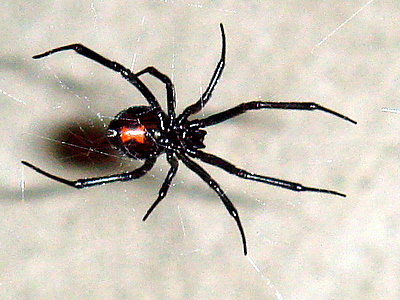
(Incidentally, black widow venom acts by causing an explosive release of neurotransmitter, which binds to ion channels, forcing them to stay open. The result is paralysis and death. Would you spray black widow venom on your yard to make it look good? I think not.)

Neonicotinoids are highly toxic and accumulate in the environment. A recent study by Dave Goulson at the University of Sussex shows that neonicotinoids have a three year half-life (that means it takes three years for half of the compound to break down). He estimates that when the compound is reapplied one year after the initial application, there is still 80% from the year before in the soil.

Bee scientists, including Marla Spivak at the University of Minnesota are calling for a change.

We need to plant pollinator gardens--everywhere. In our yards, in our cities, surrounding our farms. And those spaces must be free of pesticides. No herbicides, no insectides, no rodenticides or fungicides. All of these are toxic to the pollinators we need for our survival.

What can you do?

Join the Xerces Society's Bring Back the Pollinators Campaign: sign the pledge, then order a pollinator habitat sign to let people know what you're doing.

There is no place for cosmetic use of pesticides. Not in our lawns and gardens. Not in our cities and shopping areas.

Not any more.

Our lives quite literally depend on it.

How, then, do you prevent insect pests from destroying your garden? Biodiversity. A diverse planting attracts predatory insects that keep the pests down. It attracts birds that eat the pests. It promotes a healthy ecosystem in your yard, so that no pest species has the opportunity to reproduce to such large numbers that they can decimate your favorite plants.

And if you plant regionally native plants, you won't need to fertilize them. You'll rarely need to water them. Your garden will be both beautiful and pollinator-friendly. It will boost your immune system and lower stress.

Eliminating pesticides used for cosmetic purposes is the single easiest thing you can do to help the planet while also helping your wallet and your health.

I think it's time, don't you?

Monday, May 6, 2013

Putting threats in perspective

Recently, I got a letter from a lawn care company with "TREAT LAWN THREATS NOW!" splashed across the front of the envelope. It gave my husband and me a good laugh.

Sort of.

Actually, it was more frustrating than anything else.

When it arrived, I had just wrapped up an article on the hygiene hypothesis--the idea that our lives are excessively clean, a lifestyle that is thought to have given rise to an increase in health problems, including asthma and allergies.

Are we overly clean? Probably. And the end of my article addresses that (I'll link to it once it's published). But what really grabbed me as I researched the story is the importance of biodiversity in keeping us healthy.

What does this have to do with that lawn care envelope? The so-called "threats" to the lawn are nothing more than biodiversity. I'll get to why biodiversity is so important in just a second, but first let's look at a couple of specific "threats":

source
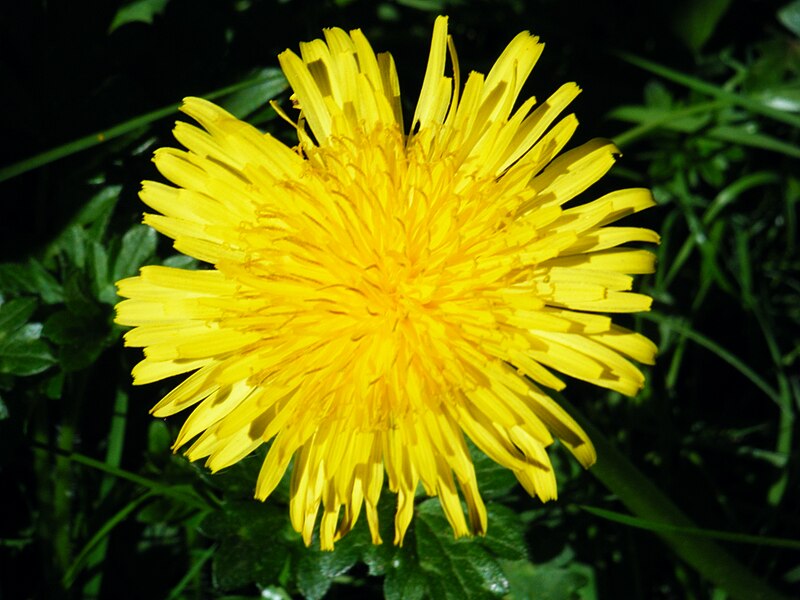
Dandelions. Every part of this plant is edible (as long as they haven't been "treated", in which case they're toxic as can be). Yes, they spread quickly. If you really don't like their sunny yellow faces in your yard, pull them. But read to the end before you decide dandelions are really enemy number 1.


source


Clover. Clover is a legume, a member of the bean family. Like all legumes, clover is capable of taking nitrogen from the atmosphere and "fixing" it, or putting it into a form that plants can use. Clover in your lawn is good because it fertilizes the grass--so you don't have to. This is good for several reasons. (1) It saves you money. (2) Almost all synthetic fertilizers are over-applied, which creates water pollution downstream as the excess runs off. (3) Synthetic fertilizers require fossil fuels, thus contribute to climate change.

source
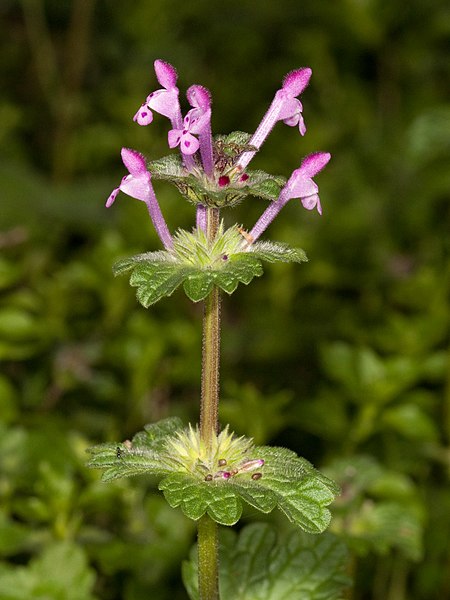
Henbit. Unlike dandelions, henbit is an annual, so each year new plants grow from seeds. It's quick to fill in empty spaces in the lawn and spreads quickly. Henbit is not native to the United States, and many people consider it an invasive weed. But like dandelions, the entire plant is edible. Right now, lawns with dandelions and henbit in them are alive with color.


Most people respond to these dastardly weeds with a spritz of weed-killer. Or better yet, they cover their lawns with pre-emergent in the spring and fall, to prevent those unwanteds from ever growing a cotyledon.

Ever stopped to think about just what those chemicals are? If they're designed to kill plants, what do you think they're doing to you? No, you're not a plant, and you lack some of the cellular structures plants possess. But that doesn't mean these chemicals are harmless. Far from it.
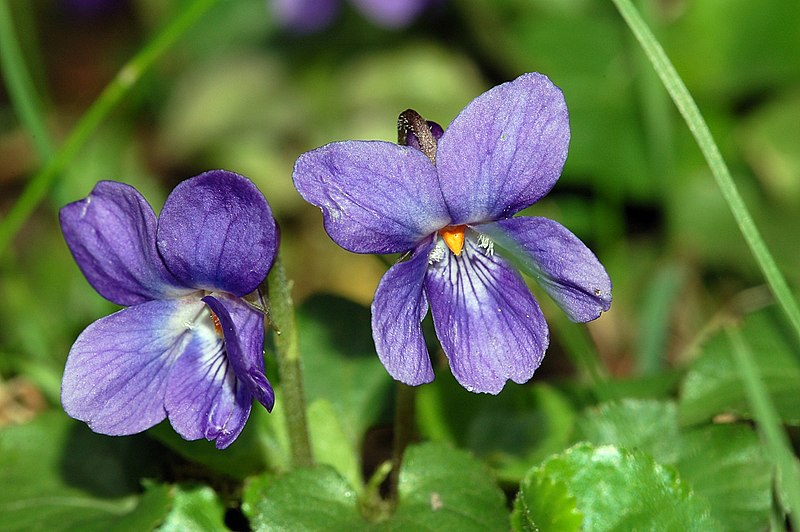
But that's not what this post is about. Eliminating those weeds decreases biodiversity. Living in a house surrounded by a rigorously-maintained carpet of grass is like living in a biological desert. Why? Because different kinds of plants are covered with different kinds of microbes. Without a diversity of plants, we lack a diversity of microbes.

Living in a place devoid of microbes might sound good, but from a health standpoint, it's a problem.

A really big problem.

You see, microbes help us in many ways (probably more than we even suspect at the moment, since this is a fairly recent area of research). They provide us with nutrients, crowd out the germs that can make us sick, and prime our immune systems.

It's looking more and more like we need microbes, specifically the ones found outside in the soil and on plants and in biologically diverse areas. Exposure appears to train the immune system, teaching it what's in the environment--teaching it what poses a threat and what's not worth a response.

People who lack that exposure to a wide range of environmental microbes have immune systems that are overactive. Because those immune systems have never learned what's safe and what's a threat, they are primed to attack everything.

The result: asthma and allergies. And more recently, researchers have learned that other diseases, including multiple sclerosis, Crohn's disease, even some forms of depression, may have roots in an improperly-primed immune system, too.

So back to that lawn care letter. What "threat" lurks in my lawn? Certainly not the weeds, nor the microbes with which they associate. That so-called "treatment", on the other hand, just might qualify.

Monday, April 22, 2013

Happy Earth Day!


In case you missed it, today is Earth Day. Celebrations have been going strong all weekend long. So join in the fun!

What can you do to note just how vital the earth is to our survival? (And it really is, down to the soil you walk on and the critters that burrow in it.) Tons of things! Pick one, try it out for today, then again tomorrow--see if you can keep it up all week. Make it a habit. But at least make an effort of some kind.

Waiting in your car for a while? If you will idle for longer than 30 seconds, turn off the engine. The amount of gas your engine needs to start is equivalent to the amount used in 10 seconds of idling. Not only will it put money in your pocket (since you are burning money when you idle), it will also improve local air quality for all those people who are ...

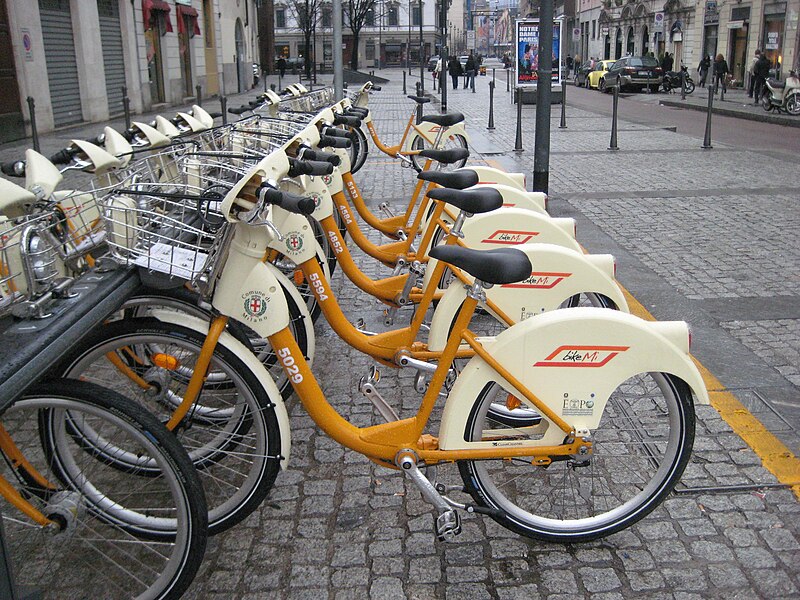
riding bikes! Why not try a day without a car? I spent five years in Germany without a car (we borrowed one -- once). We walked, biked, rode buses and trains. And let me tell you, we were in good shape. It might have taken a little longer to get places, but we never had to go to the gym (hey look--more money in your pocket!)

Not up for a two-wheeled commute? Try carpooling. Not only will it save you money (around $650 per person if you ride with one other person each work day for a year and up to $1000 per person if you fill the car - source), but fewer cars produce less pollution and reduce your carbon footprint.

Or, if you work from home, maybe you could make some changes there.

Install a rain barrel. Climate change means more extreme weather events happening more often. Ninety degree weather in March? Two feet of snow in April? Yep. This is the new normal. And that means there will be periods of drought intermixed with heavy rain events. Rain barrels are a great way to catch some of the precipitation to use during the dry spells.

Head to your local garden center and ask for regionally native plants for your garden. they'll be better able to tolerate the extremes with a lot less input from you (they usually require little to no fertilizer, no pesticides, and little water other than what falls from the sky). Choose perennials and they'll come back year after year.

Or plant a tree! Trees not only provide shade and cool the local area, they also play a critical role in maintaining the water cycle by drawing water up from the soil and releasing it into the air. This is why rain forests are rainy--the trees literally create rain by constantly releasing huge amounts of water into the air. Areas (like the Middle East) that have long been deforested eventually become too dry to support trees, which leads to further drying and eventual desertification. Don't want your area to become a desert? Take care of those trees.

What will you do to celebrate Earth day? I'm waiting for the weekend to put in dozens of native plants, shrubs and trees. Can't wait to watch my yard transform.

Monday, April 1, 2013

Not so far and away

I recently visited "Away"--that place things go when you put them out with the trash, otherwise known as the landfill. It was a really eye-opening experience, and I highly recommend it. Really. It's not at all what you think it will be, and it makes you rethink what happens to all that stuff you throw out (although I do recommend visiting before summer heat hits).

Think recyclables are reclaimed? Think again. It's too dangerous to go through garbage to remove items. So what goes into the trash truck by and large goes into the landfill. Appliances--"white goods"--are the exception. They are removed and the people who left them at the curb are fined (your trash collector will remember you if you leave out items they're not supposed to take). These are deconstructed to reclaim hazardous materials and scrap.

Everything else? Into the day's "cell" it goes (more on that below).

Perfectly good things, like used furniture, clothes that didn't sell in a big sidewalk sale or clearance (really--stores would rather throw them away than allow people--even the needy--to have them for free), and leftover food.

That last one's a huge problem, because it attracts animals by the thousands. In fact, there are so many birds at landfills, they have to be located at least six miles from the airport.

Gulls and starlings--tens of thousands of them.

In 2007, our local landfill kept track of what went in:
16% was compostable
46% was recyclable
Together, 62% of what people threw away could have been put to better use, cut down on animal pests, and saved money. How much money? Over 16 million dollars of what is thrown away each year (in my small city's landfill alone) is recyclable.

Why does that matter? The energy saved by recycling ONE aluminum can will power a computer for three hours. If you want to save energy, recycle.

Ever wonder what happens to those bags of yard waste you leave out? The leaves wind up in huge rows.

Those white things are the bags the leaves came in.

So do grass clippings. Branches go into a brush pile 1.5 stories tall. Then the leaves, grass, and chipped branches are mixed in massive rows about 8 feet wide by 6 feet tall. A special machine straddles the rows, periodically turning the yard waste from the inside out.

A quarter-mile of compost.

The temperature inside gets up to 140 degrees (F), where the landfill employees try to keep it for at least 3 weeks--compost that hot will kill disease pathogens and weed seeds. Months later, they've got mountains of compost that's pretty much free for the taking.

The landfill itself is a carefully engineered, highly organized structure where the trash trucks dump your garbage. They don't back up to a big hole in the ground and let loose. They have to go to that day's "cell" to dump their load, and someone with GPS marks the location. That way, if they ever need to recover something that was thrown out on a certain day, they know where it is. What could you possibly want to recover from a landfill? A diamond ring, maybe. Or a body (sad but true).

Heavy (100,000-pound) equipment compacts the loads. Their goal is to fit 1700 pounds of garbage into one square yard of space. Think about that for a second--just how much garbage they're cramming into landfills that fill within just a few decades.

If everyone composted and recycled, the life of the landfill would almost triple. That's pretty phenomenal.

Want to do your part? Here are some resources for getting started:

Build a compost bin. This can be as easy or as complicated as you want it to be (we have the three-bin one, which is great because we fill one of the side bins and leave it to compost while we fill the other. We put all finished compost in the middle until we're ready to use it). Not for you? Near the bottom of the link are the two simplest methods.

And in case you're wondering, NO, it doesn't smell. Not unless you put in too many "greens" (grass clippings and kitchen waste) and not enough "browns" (dried leaves, paper bags, sawdust, etc.) As long as you've got a good balance, it just smells like soil.

If you're not recycling, start. Check out the programs in your area. Most offer curbside recycling. To make it easy, look for one that doesn't require you to sort. Some take more than others, so do your research and find the ones that accept more recyclable goods.

Frustrated by the things your local companies won't take? (All that food packaging, for instance?)
RecycleCartons takes paper milk and juice cartons. If they're not available close to you (and you don't mind spending a little money now and then), you can mail your cartons in.

TerraCycle takes all kinds of "unrecyclables." Sign up for a brigade (or two or three). TerraCycle pays for shipping for most brigades. The best part? You earn points that can be donated to your favorite school or charity. Want to have a positive impact on your school? Have them set up a station for families to bring in their packaging and turn recycling into a fund-raiser.

Remember, you don't have to do everything at once: even small steps make a difference. But often people who start with small steps decide to take additional steps once they realize it's really not all that difficult or painful. I hope that's true for you.

What's your first step going to be?

Monday, February 25, 2013

Death by Snow Day

You know how deadlines tend to cluster? No? Well mine do. And I've got a bunch coming up. So naturally last week was a complete bust in terms of getting any writing done. President's Day on Monday, sick child Tuesday-Wednesday, snow days Thursday-Friday.

Two days off of school for a whopping 6 inches of snow. Every parent I know was tearing their hair out last week. And then yesterday, the local weather people said it would snow from last night until tomorrow.

So far, not a flake. Which is a good thing. School's in session today, and I might actually have a shot at squeaking in under these deadlines. Of course the flip side is that, once again, we're going to get no snow, and we desperately need the moisture.

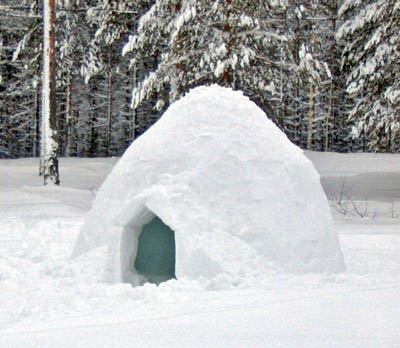
And my boys and I didn't get to build an igloo, which I'd really wanted to do. Because really, if there's no school due to snow, you ought to be able to build an igloo. Don't you think?

source
But on the positive side of things, my article on Concussion came out in Science News for Kids. If your kids are out sledding, playing hockey, ice skating, or doing other winter sports, you might want to check it out.

How do you get work done when life gets in the way?

Monday, January 28, 2013

Soothing the soul

I just placed an order for 100 trees and shrubs. Keep in mind that I don't live out in the country, not even on a small acreage. I think 100 trees might be a bit much for my family's quarter-acre property, and we're not planning to surround our house with a forest.

by Amos Oliver Doyle

Why, then, would I order so many? To start with, because I have to. It's the minimum order I can place with our natural resource district. Also because I want a nice privacy screen between my house and the neighbor who lurks in his garage smoking cigars. It would seem that he's our self-appointed neighborhood watch. While that has its benefits, I don't like that my windows are in his direct line of sight. I work at home. And every time I look out the window, he's there.

But the main reason is because I want to create a place in our yard where my kids can play, where they can explore the natural world and all it entails. Where they can pretend they're in a forest or a fort or a cave. Where they can experience nature first-hand and reap the benefits.

I'm working to create a place that will keep them, my husband, me--even that neighbor--healthy.

Because when trees die, so do people.

This article in The Atlantic describes the most recent piece of research linking trees to human health. The researchers discovered that as ash trees in the Midwest began to die by the million (thanks to an introduced pest, the emerald ash borer), more people in the areas with dying trees died of cardiovascular and lower-respiratory-tract illnesses. Now I'm not suggesting that if a tree in your neighborhood dies, so will you or one of your neighbors. But the relationship is there.

We need nature, and we are just beginning to understand the extent of our dependence. Sadly, we are dangerously close to the tipping point--the point at which we will have pushed nature beyond its ability to spring back from the punches we keep delivering.

But it's not too late. We can take small steps to help heal the natural world. Small steps to heal ourselves, as well.

My husband and I are replacing large sections of our yard with regionally-native plants. No sprays, no fertilizers, but lots of habitat for wildlife (including our boys). If the rest of the yard turns out as well as the small strip of native plants we put in last year, it will thrive even in drought. To watch something thrive when everything around it struggles? That's good for the soul.

As for the eighty-some trees and shrubs we won't use? We'll share them with others. We will happily give them away to friends and neighbors who want to add a little nature to their yard. I can only hope to find each seedling a home.

Out of curiosity, do studies like the one above make you stop to think about your relationship to nature? Why or why not?


Monday, July 23, 2012

Overcoming the sloth

This sign pretty much says it all:

That's me--second from the right (on the sign!)

It describes my current ability to function to a T. It's 105 degrees F (40.5 C) outside, with a heat index somewhere above that, the kids are bored, stuck inside and ready for school to start, and I have articles to write. I couldn't even get this post up by my usual time.

What I really want to do today is this:

Isn't he adorable? This is the two-toed sloth
we found near our hotel.

But what I AM going to do today is hammer away at my growing list of WIPs, pitch an idea I've been working on to a lovely editor, and put a dent in my to-do list. Then I'm going to escape to the basement with the kids to hide out until the sun goes down.

What do you do in the dog-days of summer? (And why are they called that, anyway?)

Monday, July 2, 2012

Pura Vida

First an update: the bats fully recovered and are once again free to hang from tree branches, pretend to be leaves, and generally try to avoid the resident blue jays.

Exciting news! My latest article is currently one of the features on Science News for Kids. Wonder what it might be like to walk down the street of a future city? Come take a peek.

I was also interviewed by Diane Kress Hower as part of her Passion for Picture Books series. Thanks, Diane!

Lots going on, though I haven't been here to post about it. I've spent the past two weeks travelling in Costa Rica with Beloved Husband. What an amazing country!

We even saw a tree bat swinging wildly from the branch of a tree (made me think of our bats). It's the perfect camouflage: just another fluttery leaf up among branches full of fluttery leaves. Except for the whole lack of breeze issue, which, uh, pretty much draws your attention to the fact that something is swinging wildly from the branch of the tree, and it's definitely not a leaf. As far as we know, it was not picked off by a roaming scissor-tailed kite, although we saw quite a few as we zip-lined through the cloud forest canopy.

I'll have stories and photos, but I'm still in recovery mode, so... not today. Instead, I just have a few quick pictures. Can you find the flycatcher, hummingbird, and woodpecker?


Wishing everyone a wonderful Fourth of July, and hoping everyone affected by the storms along the east coast is staying cool.

Monday, June 11, 2012

Holy bat-fight, Batman

When the 7YO was little, he constantly asked us things like "Who would win, a tiger or a great white shark?" "Who would win, an elephant or a grizzly bear?" He inevitably chose two animals that would never meet up in the wild, which left us pondering the fighting ability of the critters in question.

I never dreamed I would witness one of those crazy match-ups in real life (albeit on a smaller scale than the ones posed by my son).

A few days ago, the boys and I were sitting at the kitchen table, when flurry of commotion caught my eye. We always have birds in our yard--at least four species at any one time, with well over a dozen rotating through. Throw in a couple of squirrels and there's usually something going on outside our big kitchen window.

This time, it wasn't a grackle bullying a mourning dove, or a fledgling shivering its wings for food. A blue jay was rolling around on the ground, tussling with-- I had to look closely --a bat.

That's right, at 4:00 in the afternoon, the blue jay had found a bat, and was doing its best to pound it into submission. If you haven't witnessed a blue jay killing a small animal--usually a nestling--it's not a pretty sight. Lots of hard blows to the head, which a baby bird can't take.

The bat, on the other hand, was fighting back, whapping the jay with its wings (I was sure it would break one of its tiny bones), probably biting, and clearly wearing the jay out. It lay there, holding the bat close, one bat-wing wrapped around it in what closely resembled an embrace, panting. It would give the bat a hard peck, they'd tussle some more, and the jay would take a break. The bat wasn't going down easily.

The 7YO was completely distraught. He's always loved blue jays, but now he hates them. He wanted more than anything to go out and rescue the bat, but I wouldn't let him. When bats are out during the day, it's usually a sign that they're sick, and I wasn't letting my boys anywhere near it. That, and the bat fought less and less; I figured it was a goner.

The jay must have spotted us in the window, because it flew up into the tree. The bat just lay there, so I went out to check on it. This is what I found:


An eastern red bat. Her eyes are closed against the sun that's in her face, but her mouth is wide open and she's clicking at me. She kept her wings open (I thought they must have been injured and unable to close) and folded her tail membrane over ... two pups.

The eastern red bat has a whitish underbelly, so all that brown you see below her head is her two pups, cradled close beneath her wings. Two big pups. And if their mother died, so would they. I stationed the 7YO outside to keep the jay away, and called the local wildlife rehabilitator.

While we waited for further instruction, we learned a bit about eastern red bats. They're tree bats, which means that they roost in the branches of trees during the day, pretending to be a dead leaf. That's a good thing, because it means this bat and her babies were just roosting in our cottonwood, and had the misfortune of being discovered by the jay--the mother bat probably wasn't diseased, after all.

We got the call from the rehab lady (who is awesome), scooped the bat family into a towel-lined box (she told us exactly how to do it without touching them), and took them to her. We'll find out this week how they're doing, but after a quick initial inspection, she thought they looked pretty good.

So there you have it, a knock-down, drag-out jay vs. bat-fight. Don't mess with a mama bat.

Monday, June 4, 2012

Mischief makers

First, I am super-excited because my first ever children's article is out! If you happen to pick up a copy of the June/July 2012 Boys' Quest magazine, check pages 30-31 for a fun puzzle about animal teeth. I am officially a published children's author! The next one is slated to come out in Highlights in September. Squeee! 

I'm overflowing with ideas for more pieces, but school's out for the summer, which makes it hard to do anything with those lovely, shiny thoughts. It doesn't help that Loki, god of mischief, settled into our home around the time that last school bell rang. The result? A week full of conversations like this:
*boys arguing*
Me: That's enough.
*each child gets in one last zinger, and then they start up again*
Me: I said stop arguing.
not-quite-7YO: We're not arguing.
Me: Yes, you are.
not-quite-7YO: No, really, we're not.
Me: Now you're arguing with me.
4YO: No he's not.
Me: *raises eyebrow*
4YO: He's just trying to say ...
Me: *raises the other eyebrow*
not-quite-7YO: Uh ... let's go play outside.
I am blessed with two children who believe they know everything and are convinced they have a god- (think Loki) -given right to the last word in every conversation. After a week of conversations like that one, I didn't have much energy left to put into the not-quite-7YO's birthday party.

I usually do a theme, and I really wanted to do something like this:

(click on the photos for image credit)

or this:
Yeah, I know. Who am I kidding?

Then it occurred to me that a cake like that would be like the not-quite-7YO giving me a light saber. Or the 4YO giving Beloved Husband a Lego set. Or just about any toy the boys have ever stopped to drool over going to either of us. (These are actual examples. Recent ones.)

And since we've been trying to kick them of that habit, I had to find something the not-quite-7YO would actually want. But it had to be easy.

And then it hit me:

Thank you, Captain America!

Add to that, the not-quite-7YO wanted to have a treasure hunt, so the kids spent a good chunk of the party scouring the neighborhood for clues left by Loki after he stole the cake. 

They got the cake back, but Loki got away, taking both of the now-7YO's front teeth with him. Not sure it qualifies as a victory, but we'll take what we can get.

Monday, May 21, 2012

Not quite according to plan

Ah, family camping trips. Fun and adventure. Or something like that.

This past weekend, we planned to take our boys camping for the first time. They were beyond excited. In fact, they were so excited that two weeks ago, Beloved Husband and the boys set up the tent in the back yard to let it air out (I was out of town at the time). Apparently, they forgot it was outside, and a thunderstorm hit around 5:30 in the morning. A few hours later, BH dumped several gallons of water out of the tent. I guess Mother Nature thought it needed a good wash. 

source

For two weeks after that storm, we had no rain. Not a drop. Even the clouds - when they bothered to appear - were half-hearted and wispy. Weather forecast for our camping weekend: sun, sun, sun.

source
Last Thursday: we get the last of the supplies. Weather forecast for the weekend: wind. Okay. We can handle that. It's always windy here (although to qualify as "windy" with the meteorologists here, it has to exceed about 30 mph). We'll just be sure we've got extra tent stakes. Besides, the tent can't blow away with all four of us in it, right?

Friday: we collect everything we need: tent, sleeping bags, thermarests, yadda yadda. The boys have never been quicker to help than when we asked them to get everything together in one place. Weather forecast: 30% chance of thunderstorms. Hmm. We can take our chances with that, since 30% chance of storms means 70% chance of no storms.

Saturday morning. We pack up the car. The boys are racing to put stuff in the trunk as fast as they can, and they're both itching to buckle up 30 minutes before it's time to go. Just to be on the safe side, we check the weather forecast: 70% chance of storms. Severe thunderstorms. BH and I dance around the issue of whether or not we're really going to pitch the tent and pretend we're going to camp, or whether we're going to crush two weeks of anticipation while the sun is still shining. We give the boys a heads-up that weather might end our trip early.

Saturday afternoon: Keep checking the clouds rolling in. No towering thunderheads, no sign of rain, just a lovely afternoon for fishing, grilling, and other fun stuff. Might be a good night for camping, after all.

source
Saturday evening: Burgers for dinner, and the first sign of some seriously dark clouds on the way. News from someone with a decent data connection that a severe storm's about an hour away. Twenty minutes later, huge drops begin to fall, each one wetting a quarter-sized spot on the ground (I'm only exaggerating a tiny bit). We scramble to collect our stuff and hike to the car.

The drops are so cold and so big they feel like hail (the 6YO is convinced they are, until we tell him they're far too wet and don't hurt nearly enough to be hail). By the time we reach the car, we're completely drenched. BH starts the car and we head home.

The world turns gray. Wind buffets the car, driving rain in a constant onslaught against the driver's side. Then the clatter-thunk of hail joins the thrum of rain. Hail stones slide down the windows until they're bounced off by splashes of rain. Ahead of us, the painted line on the road disappears. We see an oncoming car's headlights only when it's about 20 feet away. The slightly rutted road starts flooding.

I spot a stand of trees on the left side of the road and tell BH to pull over next to it. He does, and we wait out the worst part of the storm in the shelter of the trees. Once we can see the road again, we continue on. On the other side of the lake, the roads are dry -  the storm hadn't gone that far south.

So much for our sun, sun, sun.

I blame the tent.


Monday, May 14, 2012

Changing, growing

If you've spent any time reading this blog, you'll know I like to garden. I waited ten years to have a garden of my own (container gardening, while nice, only gets you so far). So one of the first things I did when we moved into our house last fall was to tear out the grass along our fence line and put in native grasses and perennials.

Okay, it wasn't just me. Beloved Husband and both kids helped. It was a ton of work, but well worth it, because we now have this:


The neighbors, who thought we were crazy when we started, have all commented on how much they love it. And I love that it will change as the season progresses. By mid-summer, it will have lots of yellow and orange flowers blooming, and by fall, the grasses will be tall and all shades of yellow, gold, and red, some with feathery pink seed heads.

Yesterday, I was pulling weeds (yes, I pull them by hand, more on that in a moment) to the susurrus of baby cardinals begging for food in our lilac. As long as I kept my head down, the parents were content to come and go. I also discovered a bumblebee nest behind that pinkish plant in the foreground (Penstemon, for anyone who's curious).

Weed-pulling: a back-breaking, mindless waste of time, right? Lots of people think so, but I enjoy it. (Now you know why our neighbors think we're nuts.) I like it for many reasons.
  • It's hard work, but at the end of the day, I can look at the planting bed and see the results. There's very little instant gratification in writing.
  • It's back-breaking, but in a different way from writing. it stretches muscles that sit for too long when I write, so in a way it's soothing. Besides, there's something satisfying about going to bed a bit sore from a hard day's work. And I sleep better.
  • It's mindless, which gives my brain a break from constant focus and thought. The inability to sustain focus on something for a prolonged period of time (or the increasing difficulty in doing so as time progresses) is called directional attention fatigue, and studies show that exposure to nature is the best way to allow the brain to recoup and revitalize (source).
  • It's inspirational. A good many of my magazine article and picture book ideas (the non-fiction ones) are based on things I have seen while gardening or spending time outside. Gardening is also the perfect opportunity to figure out what, exactly, that random thing that just happened in my novel really means, and how it will play out later in the story (or if I should get rid of it).
And then there are encounters like these. How can you not love seeing something like this?

eastern swallowtail butterfly
Do you garden? What do you like about it? And if not, why not?


Tuesday, May 1, 2012

Save a book (and your sanity)

Happy May Day, and congrats to everyone who completed the A to Z Challenge!

Have you seen this lovely image? I love it. Simply brilliant.

source*
*Okay, I can't provide the source for that, because someone emailed it to me. I think it's going around Facebook, and if you happen to know who created it, please let me know, so I can give them credit for it.
On a separate (yet very much related) note, did you know this week is Screen-Free Week? Yesterday marked the first day of an entire week in which kids (in particular, but everyone, really) unplug. No TV, no video games, no DVDs/NetFlix/[insert entertainment media of choice here]. It's intended primarily for children, many of whom watch over 30 hours of TV a week (an average of 32 hours per week for preschool children, and it goes up from there--that's more than four hours a day for 3 and 4-year-olds!) source.

That's a whole lot of screen time, which has been shown to increase obesity and other health problems, not to mention stifle creativity (source). So this week is all about unplugging.

What to do instead?

Get outside! It's spring, go enjoy it. Not only will it allow your brain to process something ... you know ... real, it will also reduce stress, improve your attention span (really!), and help you find a solution to that problem you've been wrestling. Check out more on the benefits of nature in this post.

Go read a book! Recent studies have shown that fiction can have extensive benefits, in particular by stimulating empathy and thereby reducing social friction. If you haven't seen this article in the Boston Globe, go check it out--it's fascinating.

Do both at the same time! You can't lose, it's like earning bonus points for your life: improved social functioning, less stress, and improved cognitive functioning all wrapped into one delicious, engaging novel read in the out-of-doors.

So, in honor of all those fallen books, let's go screenless (not completely--I know we all have work to do). Maybe our collective outpouring of empathy can ease the social friction cause by *ahem* certain television shows.

What will you read this week?

Thursday, April 5, 2012

No comprende

I started a Spanish class this week. My 4-year-old son is learning Spanish, and I thought it might be useful to have some idea what he's saying. And it will come in handy when we go to Costa Rica this summer.

There's also the fact that French and German (my other foreign languages) just aren't commonly encountered here in the U.S., but Spanish is everywhere. I think it's important to have at least a grasp of basic words and phrases, and some understanding of other cultures. Yes, the official language here is English, but Spanish--and Spanish-speaking immigrants--are here to stay. It will make life easier for everyone if we all make at least a small effort to understand each other.

It's also humbling to put yourself in the shoes of a person who doesn't speak the local language well. It reminds you that just because they don't speak well doesn't mean they're stupid (which I think a lot of people tend to believe). Far from it. It simply means they don't speak it well, or aren't comfortable doing so.

How do I know? I spent five years as the person who didn't speak the native language. I am an articulate person (when I've had my morning coffee), a well-educated person (I didn't spend six years in graduate school for nothin'). But for the first several years we lived in Germany, I dreaded having to talk to anyone in--gasp--German.

source
Why? Because every time I had to talk to someone about something, one of several things would happen. Early on, my brain would go into its default foreign language mode (French), and I would say some bizarre combination of French and German (once with a little Italian thrown in--don't ask me where that came from). The person to whom I was speaking would look at me like I was an idiot, then automatically switch to English.

As I learned more German, I would carefully figure out how to properly say something, so I knew the other person would understand. I knew I'd come a long way when he/she would respond in German. But then I was stuck, either unable to understand what they had said or unable to figure out how to respond. After a few moments of struggling, the other person would switch to English.

After several years, my level of comprehension improved greatly, but there still wasn't that natural response just forming in my mind. I still wasn't thinking in German, which meant that I had to translate what they had said into English, then translate my English response into German. This process takes time--a few minutes if you want to get all your verbs and modifiers in the right places--and by then I was usually getting one of those looks that made it clear the person thought I was an idiot. And then they would switch to English. Or, if the person didn't speak English, they would wave me off.

It is incredibly humbling to be treated like an idiot when, in fact, you know you are not (usually).

We take communication for granted, particularly here in the United States, where we expect everyone to speak English. Very few people here make the effort to learn another language, unless it is required for school. And I am the first to admit, it is extremely difficult to learn another language when you have no chance to practice using it. The U.S. is a huge country. When you drive from one state to the next, the language stays the same. It's not like Europe, where you go from one country another and change languages. To be like that here, almost every state would need to speak a different language. We just don't have that incentive to learn.

Unfortunately, our lack of willingness to learn another language is viewed negatively by other nations. They resent that we come to their countries and expect them to speak our language. Rightfully so. We expect people coming here to speak English, so we should do them the same courtesy of making an attempt to speak their language. And really, the effort goes a long way.

So now I'm speaking some bizarre combination of German, French, and Spanish (Gernchish? Fremanish? Spamanch?). People will look at me like I'm an idiot when we go to Costa Rica, I'm sure. But I'll get a few words and phrases right, I'll make the effort. And that goes a very long way.

Adiós mes amies. Ich wünchen Ihnen un buenos dias.

What experiences have you had with foreign languages (whether you speak or others were speaking to you)?


Monday, April 2, 2012

Dream vs. reality

Last week, I painted the library in our house. The realtor who showed us the house called it a formal dining room, but what can I say? We like books better than dining sets that get used about twice a year.

Okay, this isn't our library, but I wish it were!

It was supposed to be easy--good quality paint, a single coat, and voila: the library of our dreams. Er, well, not exactly. You see, over the past several days, I've discovered that painting is a lot like writing.
  • The hardest part is to get that first draft coat.
  • Sometimes, when you take a step back, you'll realize that what you thought would be an incredible, amazing story color turns out to be god-awful, and you'll start from scratch with something new.
  • When you think you're done and take a step back to admire your work, you'll find it's full of holes. Some places just need a little touch-up, while others are big enough to drive a truck through. Time to revise apply a second coat.
  • The hardest part is getting the details just right.
  • Sometimes, that brilliant idea that will finish it all off turns out to make the whole thing wrong. So you revert to a previous version of the document paint over it. Unless you run out of paint. (What? It could happen. I'm just saying ...)
  • When the above happens, you can't just throw an alligator through the transom* stick a plant in front of the spot to fix it.
  • All the advice in the world doesn't teach you the craft as well as just doing it. (And redoing it.) 
* chapter 23 of Jack M. Bickman's The 38 Most Common Fiction Writing Mistakes


What has life taught you about writing? And what would your personal dream library look like, if you could build it?

Thursday, March 29, 2012

Happy, thank you

The other day I had this wonderful, overwhelming sense that all was right with the world. It isn't, of course (I've actually got some rather frustrating things happening in my life right now), so it was particularly delightful to feel so very content with my life.

It made me think of the movie HappyThankYouMorePlease. I love the concept: acknowledge when you are happy, say thanks, and respectfully ask for more of the same. (Exactly who or what you thank depends on your belief system).

I think it's important to pause and be grateful for the good things in life when you've got them. When things go well, it's far too easy to take them for granted. And when they go wrong, it can be hard not to dwell on them. But in my experience, when I stop to acknowledge the good things--to be grateful for them--I tend to get more of the same.

So here are the things for which I am incredibly grateful, in no particular order:
  • Spring is here and the sun is out.
  • The plants I put in last fall survived the very dry winter. Some are already blooming.
  • Trees are flowering everywhere, and the air is perfumed with their scent. It reminds me of springtime in Berlin, which I sorely miss.
  • I am currently working on an article for a science magazine for kids (can't tell you which one, just yet)--it's a fantastic opportunity and lots of fun.
  • An editor asked me to revise and resubmit one of my non-fiction PB manuscripts and gave me an estimated time frame to hear back from him on the revision.
  • I have an amazing group of critique partners and beta readers who have helped me make my work shine; without them the previous item would not have happened. 
  • My mom came to visit and helped me paint the library (a realtor would probably call it the formal dining room, but we keep books there instead of a table).
  • Koda has figured out he's not alpha (he tried for a while, but he's finally realized he's on the bottom rung). Now that he knows his place, he's the sweetest dog we could have hoped for.
  • And of course, my wonderful family, who put up with more than their fair share of craziness with me.

These are growing in my yard--love 'em! (source)

What are you grateful for?

Thursday, March 22, 2012

Not a drop to drink

Thanks for the great comments on Monday's post! I think sometimes people see those of us who advocate for nature as thinking we need to do away with all things tech. Although there may be people like that out there, I'm not one of them. Technology has lots of great things to offer, and it's not going away (nor should it).

I'm simply advocating for incorporating some "nature time" into daily life--half an hour or so to recuperate from a crazy day and find some sense of balance.

And in other news ...

Did you know today is World Water Day?

source

Water day? Why do we need a water day? Personally, I think it's so I can share some mind-blowing facts with you (all but the last are from waterfootprint.org):
  • it takes 109 liters of water to make one glass of wine
  • 15,400 liters of water are needed to produce one kg (just under half a pound) of beef
  • chicken is better at 4300 liters for one kg of meat
  • the average water footprint for one kg of bread is 1608 liters
  • it takes 5060 liters of water to make one kg of cheese
  • a 100-gram chocolate bar requires 1700 liters of water to make
  • 560 liters of water go into growing 1 kg of oranges
  • 1 kg dry pasta takes nearly 1850 liters of water to make
  • one pair of Levi's jeans uses over 3,000 liters of water over its lifetime (from growing the cotton to laundering) (source)
And that doesn't take into account the cooking process, washing up after preparing food, or any other direct use of water involved in food prep. Hmm, makes drought look downright scary, doesn't it? (That's why I write novels about it, mwa-ha-ha-ha-ha!)

I'm actually writing (on the non-fiction side) a profile about the founder of the Water Footprint Network, so World Water Day was timely. There are some amazing graphics (and more mind-blowing facts) on the WFN website--go check them out!


If you had to guess, what part of your day uses the most water?

Monday, March 19, 2012

Where the wild things aren't

Where are the wild things? Not in children's books (or, to be accurate, less so with every decade that passes). So says a team of researchers who studied Caldecott winners and honor books from the past 70 years. The recent study determined that scenes depicting nature have declined steadily over time.

That's not really all that surprising, is it? It mirrors what's happening in our lives. Most children spend the vast majority of their time indoors or in built environments (e.g., cities), so why would we expect characters in books to do otherwise?

And does it really matter, anyway? As one discussant in a recent LinkedIn discussion asked, should we be disturbed by this trend?

source

I'll let you come to your own conclusions on this, but first, a few items of interest.
  • Children who live near natural settings experience less stress. (source)
  • Kids who move to greener locations demonstrate improved cognitive abilities. (source)
  • Kids with ADHD have milder symptoms when they have regular "green time"--time spent in nature. (source)
  • Symptoms of ADHD decrease immediately following a 20-minute walk through a park. (source)
  • Inner-city girls with a view of nature (e.g., trees outside their windows) have greater self-discipline and are better able to concentrate. (source)
  • Areas with trees provide better opportunities for play, and play is an important part of childhood development. (source)
  • Young children who spend time in "outdoor classrooms" have longer attention spans and better motor coordination than children who spend only short periods of time outdoors. (source

source
What if you're all grown up, or don't suffer from ADHD? Not to worry, nature affects adults, too.
  • People living in green areas are less likely to procrastinate, find their problems less overwhelming, and are better able to overcome them. (source)
  • People living in housing near green areas (trees and grass) are less likely to be involved in domestic violence. (source)
  • People living in areas with more natural settings are healthier. (source)
  • Patients with a view of natural scenery recover faster from surgery and request less pain medication. (source)
  • College students with natural views outside their dorm windows are better able to concentrate. (source)
So what do you think? Do you think there's reason for concern?