Showing posts with label non-fiction. Show all posts

Friday, January 10, 2014

Celebrating success

Confession time: I thought I'd be wrapping up 2013 with a big announcement. I had it written in my head. Things were about to happen. Then, in early December, it all fell through. After eight months of back and forth with a wonderful agent, she ultimately decided my work was too similar to those of her existing clients, and, well, it wouldn't behoove any of us for her to take me on.

It was devastating.

But she was right.

Now I'm trying to pick myself up and get my work out there again. It's not easy, not when I'd let myself get so invested. But I need to move on, and what better way to do that than to focus on recent successes!

Thames Festival Firework Display Blackfriars - geograph.org.uk - 40284
by Christine Matthews
I have two new stories out in Science News for Students:

Caught in the act looks at how animals adapt to a rapidly changing world. Humans are changing the world faster than ever (in fact, we are now considered to be THE driving force of change on the planet, the focus of another story that should be out in a month or two), and only animals that can adapt in time will be able to survive the transition. "Caught in the act" provides some hope on that front.

Why are bees vanishing?, out today, examines the latest scientific findings that are unraveling the mystery of colony collapse disorder. With one-third of the food on our tables requiring pollination by bees and other pollinators, their disappearance is nothing to ignore. And pesticide use--around the home and garden--might be a major culprit, even when used in moderation. You can find out better ways to control pests in my explainer, How to limit the need for pesticides.

Things are moving forward. As they should.

What successes are you celebrating?

Wednesday, July 31, 2013

Now out!

As I mentioned a while back, I recently wrote an article about the importance of getting outside into biologically diverse areas in terms of keeping us healthy--specifically helping to prevent asthma and allergies.

It's now out: Some dirt won't hurt, and I'm really excited about it. It was incredible to interview the scientists whose work is uncovering the links between health and microbial exposure. We need to expose ourselves to plants, dirt, and the microbes found in both. This is particularly true of small children, whose immune systems are still developing.

Photo by Ryan Somma

What to do if you don't live on a farm or out in the country? One way to gain exposure to biodiversity is through green roofs and living walls on buildings right there in the city. Check out more in the July/August issue of ASK (arts and sciences for kids) magazine--my article "It's a Jungle Up There" covers how they're built and the many benefits that come from their construction.

But even without a jungle in the city, you can benefit from exposure to natural areas. Visit a park and get back to nature, but don't just look at the view. Get dirty. You'll boost your immune response while lowering stress. What could be better?

Thursday, April 4, 2013

School visits!

I know, I'm blogging twice in one week. I don't *think* the apocalypse is nigh, but I'm probably not the best gauge.

I've been doing lots of school visits over the past couple of weeks, and I just want to say a big
to Belmont and Morley teachers and librarians for inviting me, and to their fabulous students for being so attentive, asking such great questions, and generally making my job a ton of fun.

From researching and writing non-fiction with fourth and fifth graders to the adaptations of native plants and the extraordinary world of native pollinators with second graders (complete with getting dirty and planting some seeds), it's been an extraordinary series of visits.

Thank you all for letting me share my knowledge and my writing with you! I hope someday soon to return with my books--in addition to my magazine articles--in hand.

Monday, February 11, 2013

Staying curious

Saturday was one of those wonderful days when my contributor copies landed in the mailbox. This time it was the March issue of Highlights for Children, which has an article I wrote about a scientist and her research on black howler monkeys.

Black howler monkey by LeaMaimone. (source)

She discovered that they can count, just by listening to the roars of other troops. Very cool stuff. Highlights isn't available online, but I have also written about her work (and research on many other clever critters) in this piece on Animal Cognition, if you'd like to learn more.

Many of the non-fiction pieces I write profile a scientist or scientists and their work--all of my Science News for Kids stories do this, and most of the ones I've written for Highlights, too.

I absolutely LOVE that part of my job. Scientists do the coolest stuff. I mean, who else would think to drag a sled filled with speakers, poles, a tape player, an amplifier, and a boat battery into the Belizian jungle to find out whether or not howler monkeys can count?

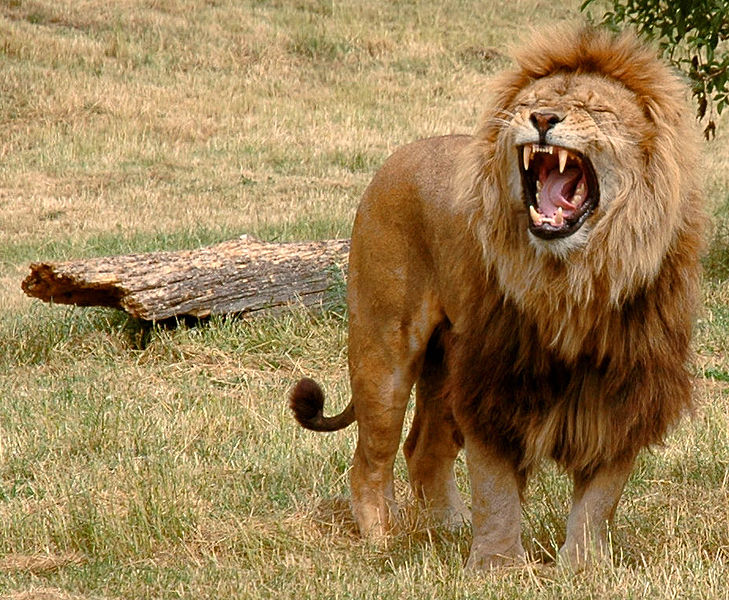
Who else would take life-sized stuffed-animal lions with removable, velcro-able manes into the Serengeti to find out why lions have manes at all? You can find out more about that one in the March issue of ASK (Arts and Sciences for Kids) magazine.

photo by Robek (source)

Scientists look at the world around them and see things they can't explain. They ask interesting questions and design fascinating experiments in their search for an answer. They are the most curious people on the planet, second only to kids. Some are probably more curious than your average kid.

And that's what makes science so much fun.

Which is why I have a hard time understanding why our school kids, who are naturally incredibly curious people, aren't doing well in science. I don't teach in K-12, so I'm not in the classroom to know what activities they're doing to learn about science. I do know that many elementary teachers don't have a background in the sciences, and perhaps that's a contributing factor. I really don't know.

Are we not letting kids observe and ask questions? Not giving them the directed freedom to figure out how to find an answer? Kids are good at that. It comes naturally to them. Just imagine what could happen if we harnessed that potential. All it takes is a creative mind and a supportive atmosphere. Science doesn't have to be costly. Some of the best experiments are incredibly simple.

So why aren't our students performing well on science tests? Scientists are just kids who never lost their curiosity about the world. How can we help our kids keep theirs?


Thursday, September 27, 2012

Nurturing curiosity

Last weekend, I attended the Rocky Mountain SCBWI conference in Denver. It was a terrific meeting (such an enthusiastic, involved group!), and I had the opportunity to talk with agent Karen Grencik of Red Fox Literary, and editors Emily Clement of Arthur A. Levine Books and Sylvie Frank of Holiday House--gracious women, every one.

As a non-fiction writer, I paid close attention when the Common Core State Standards came up. Both Karen and Sylvie mentioned the importance of tying books to the Common Core. If a story has the potential to be used in the classroom, it will be much more likely to get published.

More and more, teachers are looking for books that allow them to "teach smarter, not harder," as a principal at a nearby school so eloquently put it. What does that mean? Teachers need books that teach literacy while providing curriculum-related content. Books that kill two birds with one stone, if you will.

(As an aside: If you teach science, Melissa Stewart has a terrific Pinterest board to help you find books to fit some of the Common Core standards.)

Teachers need to find ways to teach math and science simultaneously. Science and math are closely connected, and yet I get the sense that they're typically taught as completely distinct subjects. Do they have to be? Can't we interweave them, thereby increasing the amount of time available to dedicate to both?

For example, in a life cycles unit a class may order caterpillars. Watching them pupate and emerge as adult butterflies is a remarkable experience, but it can be so much more.

source

Order caterpillars that are smaller, those that have more time to grow. Then have the students measure them. Weigh them. Graph the change in size over time. Weigh plant material before it's given to the butterflies, then again a day later. How much weight was lost? Was the same amount gained by the caterpillars? Why or why not? If the plants lost more weight than the caterpillars gained, where could the rest have gone?

Think you don't have enough science time to extend the life cycles unit? That's the beauty of "teaching smarter"--you can squeeze science into the daily math routine. And numbers are so much more interesting when they mean something.

I think--or rather hope--that the Common Core will encourage just this kind of cross-over in the classroom. After meeting with the principal mentioned above, and one of the teachers at her school, I strongly believe that we can again foster a love of science--and math--by returning to a hands-on approach and blurring the lines between subjects.

Math is fun and cool when it has real-life application. And science is all about curiosity--after all, what is a scientist but a kid who never stopped asking "Why?" 

The possibilities for exploration and discovery, critical thinking and inquiry-based learning are endless if we can just start to see the curriculum in a new way. 


Monday, April 16, 2012

Marketing Monday: Loree Griffin Burns

Welcome back, Loree Griffin Burns!

Last week, Loree shared what made her transition from science to writing for kids. Her non-fiction middle grade books: Tracking Trash, The Hive Detectives, and Citizen Scientists can be found in many (many!) schools and libraries. Today she's here to share more about how she made that happen (aside from the obvious: she wrote terrific, information-packed books that are filled with wonderful illustrations).


Your books are packed with timely information, making them perfect for the classroom. How have you reached out to teachers and librarians to get your books into schools?

I’m very lucky to work with publishers that are experts at this. Both Houghton Mifflin Harcourt and Henry Holt Books for Young Readers have worked hard to get my books into the hands of reviewers who, in turn, let the world’s teachers and librarians and parents and book lovers know about my work.

Most of my own outreach is focused on personal interactions—school and library visits, conference and festival presentations, and the like. I have also tried to establish an online presence through which folks can connect with me. I have a website, a blog, a Facebook page; I catalog my personal library publicly on LibraryThing, and I share track the books that delight me on Goodreads; I’ve recently learned to tweet!

On a very practical level, I maintain a database of email contacts—friends, neighbors, colleagues, teachers, parents—anyone with whom I’ve connected personally over books or nature. I’ve found this a useful tool for letting people know about new books and bookish events.


What have Houghton Mifflin Harcourt and Henry Holt BYR done to promote your books? Do you have a sense of how the process might differ from promoting fiction?

As I mentioned, one of the wonderful ways my publishers support me is by providing review copies of my books to a long list of kidlit reviewers at professional journals and online. They also submit my books to prize committees and support/advocate for my participation in conferences that are relevant to my work.

As a great example, I’m typing this from Indianapolis, where I’ve been attending the National Science Teachers Association annual conference. I spent the past three days talking with teachers who use my books in a classroom setting, hearing directly from them why trade books on science topics are vital to their teaching, and sharing ideas for how we (writers and teachers and publishers) can continue to inspire a new generation of science-savvy citizens.


How important are school visits to spreading the word about your books?

School visits are a great way for me to interact with my readers. Classroom visits are hugely gratifying for me, because this is one of the only times I am able to connect in person with the people I write for. I love to see student reactions to the stories I tell, and to get their (always honest!) feedback on what works for them … and what doesn’t. And if I do my job well, the word-of-mouth that follows is a great way for other teachers and librarians to hear about me and my work. All of my school visits (I do about 25 events a year) comes about by word of mouth.

In my experience, however, school visits don’t lead to more book sales. This is likely a reflection of the way I do visits: for the most part, I limit myself to local venues in my home state, and I don’t require schools to sell books as part of my event. Authors that do great visits, advertise widely, travel afar, and tie book sales/signings to their events are much more likely to impact their sales figures.


I would imagine school visits are content-based, rather than focusing on the writing process. How do you make them fun, rather than another science lecture?

My presentations are, indeed, content-based, and I think I’m pretty lucky to be always sharing stories that are naturally interesting to students. I use props and personal anecdotes, and students really respond to them. In post-visit surveys, teachers insist that the part of my presentations that are ‘most effective’ are the bits where I share my own personal story. Kids like to hear that I was once a kid, too, I guess. They love photos. When I was just starting out with school visits, I felt compelled to keep these bits of the program to a minimum, thinking that my “job” for the day was to excite kids about science through the content I’d been invited in to discuss. I’ve come to realize that exciting kids about science includes helping them to see that everyone—even a kid like me … even a kid like them—can grow up and become a scientist. Or a writer. Or both.

* * *

Nothing better than providing inspiration just by sharing your own story!

Thank you so much, Loree, for sharing your experience with us!

* * *


Loree writes books about science for children ... and she loves her job. From an oceanographer who tracks plastic ducks through the world ocean to an entomologist who studied mason bees in his backyard to an astronomer who spent her life puzzling over ground drawings in the desert of Peru, the scientists she meets every day — in person or through her research — are fascinating and passionate people. She loves to share their stories through her  books.


Monday, April 9, 2012

MMGM: Loree Griffin Burns

Marvelous Middle Grade Monday is the brain child of middle grade (and young adult) author Shannon Messenger, who wanted to highlight the fabulous books out there for middle grade readers. 

I know most people who blog about MG books focus on novels, but there's some outstanding (fun, informative) non-fiction, too.

Please welcome Loree Griffin Burns, author of Tracking Trash, The Hive Detectives, and, most recently, Citizen Scientists. I first learned of Loree's books from Kathy Erskine at the Highlights Foundation's Children's Writers Workshop last summer, and I am SO glad Kathy pointed them out.


Goodreads blurb for Citizen Scientists:  
Anyone can get involved in gathering data for ongoing, actual scientific studies such as the Audubon Bird Count and FrogWatch USA. Just get out into a field, urban park, or your own backyard. You can put your nose to a monarch pupa or listen for raucous frog calls. You can tally woodpeckers or sweep the grass for ladybugs. This book, full of engaging photos and useful tips, will show you how.

As a former scientist and general lover of all things nature, this is my kind of book. Loree provides a seasonal progression of science-based activities for kids, each of which not only broadens a child's understanding of the natural world, but also contributes to scientific understanding of the world around us.

Loree has a remarkable ability to make science accessible. Her writing is engaging and her topics salient. And she even agreed to an interview! Please welcome Loree Griffin Burns.

Most Ph.D.s write for adults; what got you started writing for kids (and how difficult was it for you to make the switch, after writing for other academics)?

I’ve been a reader and a writer my whole life. For some reason, though, it never occurred to me to write about science. Instead, I wrote poems and short stories and even attempted longer works of fiction—from middle school right through to my graduate school days—always believing this hobby of mine was simply a nice outlet, a break from the intensity of a life focused on subjects like math and biochemistry. When my husband and I started our family, I decided to put my research career on hold while our three children were young. It was while I was home with them, reading lots of children’s literature and thinking hard about the things I most wanted to share with my own kids, that it finally hit me: perhaps I should write about the topics I was most passionate about. And so I began to write true stories of science and nature.

I should add that I honestly don’t think of my work as being just for children. I write for curious people of any age who are interested in the same things I am interested in: our world, the creatures that live in it, the people who explore it, and the ways they explore it. Of course, most of my readers ARE children, and I do consider that when I am choosing topics, structuring stories, and thinking about things like context and voice and word choice. My first drafts are always riddled with technical language that I slowly, through several rounds of revision and with the help of patient editors, smooth out. I do blame this tendency toward techno-speak on my science training!

What gave you the idea for your first book, Tracking Trash?

In the spring of 2003, I read a newspaper article about a decade-old cargo spill that had dumped nearly 30K plastic tub toys into the Pacific Ocean. The article predicted some of those toys would wash ashore in New England, where I live, over the following summer. This story captivated me. Who knew plastic ducks would float in the ocean that long? I wondered what route they followed from the Pacific to the Atlantic—across Arctic Ocean? around South America and through the Southern Ocean? short-cut through the Panama Canal? It was also clear from the predictions that someone, somewhere, was following these ducks. Who was that person? How was s/he following them? And, for the love of Pete, why was s/he following them? I began to look for more information on the story, and as I uncovered it, became convinced it would make a great hook for a book about the ocean, how it moves, and what it moves. Tracking Trash: Flotsam, Jetsam, and the Science of Ocean Motion (Houghton, 2007) was published four years later.

After writing about the plight of the honey bees, what state do you think our apiaries are in? Are we headed for bee-mageddon (and the resulting loss of human food), or can science help turn things around? (Or can native species pick up the slack)?

I’m truly not qualified to answer this question; it would be better posed to one of the hive detectives. But from what I’ve read and heard from my beekeeping friends, our apiaries are in terrible shape, at least compared to the apiaries of the 1980s, a time before Varroa mites and the bee diseases they help to spread, before systemic pesticides and the enormous expansion of our agricultural system. It’s clear that each of these changes is impacting the overall state of apiculture. Just this week, the results of two new studies were published that seem to indicate, once again, that systemic pesticides are harmful to bees. We’ve got a lot to figure out.

As for a bee-mageddon, though, I don’t think that is where we are headed. I am an eternal optimist. Part of the message I hoped to share in The Hive Detectives is that we humans are very good at detecting problems, analyzing them, and figuring out ways to circumvent and overcome them. Some truly fine scientists are working to understand Colony Collapse Disorder, and they are learning things that will help us figure out how to help the honey bee survive.

Your newest book, Citizen Scientists, is an account of the many opportunities for kids to get involved with citizen science projects. Why do you think this is important?

Firstly, I think citizen science is an incredible tool for empowering people of all ages in these days of environmental uncertainty. Bad environmental news can be overwhelming sometimes—trash in our oceans, decline in honey bee populations, changing climate, disappearing species, oil spills, natural disasters. It’s a lot to take in, and it’s easy to be overwhelmed. I find that having something to do—something concrete that I can do with my own two hands and that will make a difference—is comforting. Citizen science can be that something.

Even more than that, though, I like the way practicing citizen science—carefully observing the world around me, recording what I see, and sharing that record with professional scientists who are interested in the information—slows me down, reconnects me to the natural world I live in, better acquaints me with my one small patch of the Earth, reminds me of just how incredibly beautiful our world is.

I hear criticism sometimes that the data collected by citizen scientists—children or youth or adults who are not trained as scientists—is not as dependable as data collected by professionals. These critics worry about protocols being followed properly, data being misunderstood or misreported. They also point out that data collection is not, in itself, science. While these are valid concerns for those who use the data collected by citizen scientists, for me—and for parents and educators and naturalists everywhere—citizen science is about tuning people in to the living, breathing natural world. It’s a learning tool. It connects people with their environment. It invites them to participate in human discovery. For me, these are the deeper value of citizen science; the data is a bonus.

What project are you working on right now?

I'm working on two books at the moment: my first picture book and a new Scientists in the Field book. Both will be illustrated by Ellen Harasimowicz (www.ellenharasimowicz.com). The picture book is a butterfly life cycle book with a twist: did you know that most of the butterflies flitting about the live butterfly exhibit at your favorite museum or butterfly house very likely spent their caterpillar days in Central America? Our new SITF book is called Beetle Busters, and its about a tree-munching invasive beetle that has invaded North America and, of course, the men and women who are studying it.

* * *

Thank you Loree! I can't wait to see what your next books bring.

Join us next week for Marketing Monday to learn how Loree and her publishers get her books into the hands of middle graders, teacher, librarians, and parents.

And check here for more terrific MMGM reviews.

* * *


Loree writes books about science for children ... and she loves her job. From an oceanographer who tracks plastic ducks through the world ocean to an entomologist who studied mason bees in his backyard to an astronomer who spent her life puzzling over ground drawings in the desert of Peru, the scientists she meets every day — in person or through her research — are fascinating and passionate people. She loves to share their stories through her  books.


Thursday, March 29, 2012

Happy, thank you

The other day I had this wonderful, overwhelming sense that all was right with the world. It isn't, of course (I've actually got some rather frustrating things happening in my life right now), so it was particularly delightful to feel so very content with my life.

It made me think of the movie HappyThankYouMorePlease. I love the concept: acknowledge when you are happy, say thanks, and respectfully ask for more of the same. (Exactly who or what you thank depends on your belief system).

I think it's important to pause and be grateful for the good things in life when you've got them. When things go well, it's far too easy to take them for granted. And when they go wrong, it can be hard not to dwell on them. But in my experience, when I stop to acknowledge the good things--to be grateful for them--I tend to get more of the same.

So here are the things for which I am incredibly grateful, in no particular order:
  • Spring is here and the sun is out.
  • The plants I put in last fall survived the very dry winter. Some are already blooming.
  • Trees are flowering everywhere, and the air is perfumed with their scent. It reminds me of springtime in Berlin, which I sorely miss.
  • I am currently working on an article for a science magazine for kids (can't tell you which one, just yet)--it's a fantastic opportunity and lots of fun.
  • An editor asked me to revise and resubmit one of my non-fiction PB manuscripts and gave me an estimated time frame to hear back from him on the revision.
  • I have an amazing group of critique partners and beta readers who have helped me make my work shine; without them the previous item would not have happened. 
  • My mom came to visit and helped me paint the library (a realtor would probably call it the formal dining room, but we keep books there instead of a table).
  • Koda has figured out he's not alpha (he tried for a while, but he's finally realized he's on the bottom rung). Now that he knows his place, he's the sweetest dog we could have hoped for.
  • And of course, my wonderful family, who put up with more than their fair share of craziness with me.

These are growing in my yard--love 'em! (source)

What are you grateful for?

Thursday, March 22, 2012

Not a drop to drink

Thanks for the great comments on Monday's post! I think sometimes people see those of us who advocate for nature as thinking we need to do away with all things tech. Although there may be people like that out there, I'm not one of them. Technology has lots of great things to offer, and it's not going away (nor should it).

I'm simply advocating for incorporating some "nature time" into daily life--half an hour or so to recuperate from a crazy day and find some sense of balance.

And in other news ...

Did you know today is World Water Day?

source

Water day? Why do we need a water day? Personally, I think it's so I can share some mind-blowing facts with you (all but the last are from waterfootprint.org):
  • it takes 109 liters of water to make one glass of wine
  • 15,400 liters of water are needed to produce one kg (just under half a pound) of beef
  • chicken is better at 4300 liters for one kg of meat
  • the average water footprint for one kg of bread is 1608 liters
  • it takes 5060 liters of water to make one kg of cheese
  • a 100-gram chocolate bar requires 1700 liters of water to make
  • 560 liters of water go into growing 1 kg of oranges
  • 1 kg dry pasta takes nearly 1850 liters of water to make
  • one pair of Levi's jeans uses over 3,000 liters of water over its lifetime (from growing the cotton to laundering) (source)
And that doesn't take into account the cooking process, washing up after preparing food, or any other direct use of water involved in food prep. Hmm, makes drought look downright scary, doesn't it? (That's why I write novels about it, mwa-ha-ha-ha-ha!)

I'm actually writing (on the non-fiction side) a profile about the founder of the Water Footprint Network, so World Water Day was timely. There are some amazing graphics (and more mind-blowing facts) on the WFN website--go check them out!


If you had to guess, what part of your day uses the most water?

Monday, February 6, 2012

Boot Camp

If you are interested in writing nonfiction for kids, the Highlights Foundation has a couple of terrific workshops coming up: Nature Writing Boot Camp (April 16-19) and Science Writing Boot Camp (April 19-22).


Both workshops offer a terrific opportunity to work with award-winning authors and editors, learn how to write science as a an engaging story, and get feedback on your work.

Not sure you can afford it? The Highlights Foundation offers scholarships. (They're worth it people--I speak from experience!)

And if non-fiction isn't your thing, check out the other workshops offered by the Highlights Foundation. There's something there for everyone.

Wednesday, February 1, 2012

WIP Wednesday

Whew! I'm nearing the end of revisions on Thunderstruck (and I mean serious revisions, as in cutting nearly 5,000 words, changing the voice, and adding a character). So naturally, instead of finishing, I've been working on other things.

I've got two articles about critters nearly ready to go (just waiting on an expert review for one of them), and this morning I sent off a picture book manuscript that I've been working on for two years (hey, it rhymes and it's fiction; it's taken a while to get it just right).

And a bit of good news--I received a contract for an article with Highlights! I have now earned enough money from my writing (this year) to buy a couch for the basement, so Koda doesn't sit on us while we're watching movies. *throws confetti*

February's off to a good start!

And in other news, it's sunny and almost 60 degrees out and tomorrow is Groundhog Day (not sure what that is? Read this. Even if you do know, you should read it anyway!).

source
 What do you think, will Punxsatawney Phil will see his shadow tomorrow? Is winter already over for the year?

Friday, October 7, 2011

What's in a name?

My writing tends to go in stages. I'll work for two months on a novel, then my mental pendulum swings back over to the non-fiction side and I'll crank out several magazine articles and a picture book or two. Then it swings back to the fiction side for edits... back to non-fiction... You see where this is going.

Lately, I've been in a non-fiction phase. I think this is probably because I'm querying my novel, and I have an editor waiting for a rewrite on a non-fiction story (my critique group has it right now). So I'm filling the time with fun stuff for magazines.

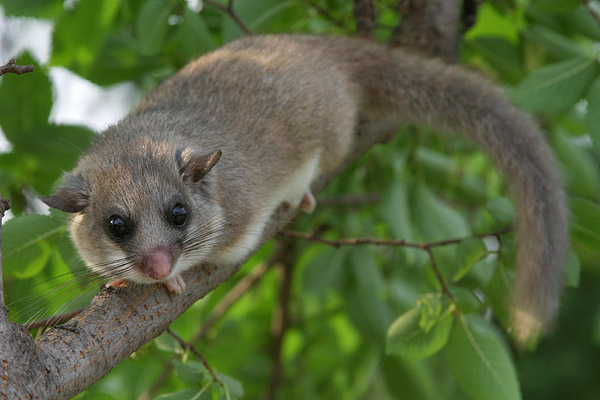
One of the things I love about writing for kids' mags is that they're often looking for fun stories about animals. One of the critters I've written about recently is this guy:

source

Pretty cute, isn't it? It goes by many names, including fat dormouse, edible dormouse, and Siebenschläfer (seven sleeper).

Now, without googling it, why do you think it has those names?

Monday, October 3, 2011

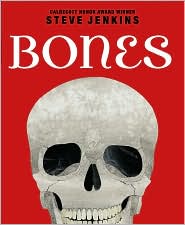
Bones

About a year ago, I told my husband that I wanted to write a book about bones. One that highlights their homology across species. Or in more kid-friendly terms, one that shows how the same bones are in the same places and do very similar jobs in lots of different kind of animals.

For example, A bat's wings are membranes stretched between their incredibly long finger bones. A whale's flipper has the same bones but much shorter, stouter, and crowded together. They have the same single upper-arm bone, two forearm bones, set of rock-like wrist bones, and elongated hand/finger bones that we do. They have simply been modified through time to suit their particular use.

Then one morning, my husband said, "Hey, look at this!" He pointed to a Science book view: BONES. "Looks like you had a good idea."

source

Yep. Good idea, too late. It was beautifully done by Steve Jenkins. So beautifully done, it won a Caldecott Honor Award. I have been wanting to get my hands on this book ever since, and we finally got a copy last week.

BONES is truly stunning. The illustrations are cut paper but are so realistic they look like photographs. (After teaching general zoology for several years, I've seen my share of animal skeletons up close and personal, and these are extraordinarily life-like.)  Some pages show different hands and feet. Others have different animals shown to scale, so it's easy to compare the femur (thigh bone) of an elephant, a human, and a cat. Or the ribs of a human, sloth, turtle and python (all 200 of them).

The text explains, in clear language, the various jobs of bones, from support and movement (via joints) to making blood cells.

It is exactly the book I wanted to write, illustrated in a manner I could never have done. And I am thrilled to add it to our collection. If your kids get Scholastic book club orders, look for it there in paperback. You'll learn a lot and love the illustrations, too!

Have you ever had an idea only to discover it had already been done?

Wednesday, September 14, 2011

Hooking teachers and librarians

One of the terrific things about Chautauqua was having a chance to meet with lots of teachers and librarians (on the faculty and among the attendees) and hear what they look for when they select trade books for the classroom and library.

Guess what? It's not just about content. (Obviously that's important, but content alone won't do it.)

source

Most teachers at the elementary level choose books that complement their curriculum. Fiction or non, the books need to dovetail in some way with the concepts that are being taught. And if the books connect different areas? Even better. (Think multicultural issues and geography, for example.)

How do you know whether your book will complement the curriculum? Do a google search for "state curriculum standards." Start with your state, then check out others. How do they compare? Can you make a case in your query/cover letter that your book could be used by schools in a number of states?

How books are written is also important: books that assume background knowledge kids don't have will NOT be used in the classroom. Background needs to be built into the text, so the readers can understand without having to fetch a dictionary.

Illustrations? They're terrific! But they need to appear on the same page spread as the relevant text. If the reader has to flip a page (or two) to find the illustrations, teachers will skip the book. Make the information easily accessible to your readers. Ask to see page proofs and make it clear that you want a layout that enhances readability and retention of information.

Teachers and librarians also need to teach study skills. How? By choosing books that have a table of contents, a glossary, an index, and a list of additional resources. List of possible discussion questions? Bring 'em on! Anything to make a teacher's life easier will be greatly appreciated.

If your book would work well in the classroom, be sure to mention how it addresses these kinds of things in your query letter. Many schools use the SQ3R reading method. Describe how your book can be used in this way. Not only will you impress the editor reading your submission, you vastly increase the chances of getting your books into schools and libraries.

What is your favorite book that was/is used in the classroom? Why?

Monday, September 12, 2011

Resonance

Have you ever finished a book and felt that the end somehow wrapped up the entire story in a way you couldn't quite put your finger on? Something subtle? Chances are, the author created an ending that resonated with the beginning.

The same is true of magazine stories (fiction) and articles (non-fiction); in fact, the resonance is often more noticeable in a thousand words or less. It's that clever ending that returns to the premise from the opening paragraph. Pick up an issue of Highlights magazine, and you'll see what I mean.

It turns out, that resonance is intentional. It is one of the things editors look for in the articles and stories they evaluate. If you write for Highlights or other children's magazines, check for this before you submit.

Resonance isn't just for short pieces of work. Sara Grant, author of the recently released Dark Parties, incorporated resonance into her novel and recommends that other authors do the same. This isn't the answer to the big question posed on page one, rather something quiet... something that provides emotional satisfaction for the reader. It brings the work full circle.

What examples of resonance have you seen lately?

Friday, September 9, 2011

Writing engaging nonfiction or historical fiction

I attended sessions for both fiction and nonfiction writing at the Chautauqua workshop, and over the coming weeks, I'll share some of what I learned from those workshops here.

The biggest point to come up in the nonfiction sessions? Nonfiction can—and should—be presented as a story. No boring facts, no encyclopedic recitation, and for heaven's sake, no passive voice! When you present information in an engaging fashion, the audience will continue to read and be more likely to retain the information.

Fact or fiction? Born 1596, died 1722? (source)

Ever take a class that you hated? Science or history, perhaps? There's a good chance you didn't like it because you were forced to memorize facts. But if that information had been given to you as part of a story—part of a bigger picture—I suspect you would have felt differently about it.

For most of my life, I hated anything having to do with history. Why? Because every history class I took focused on names and dates. It was mind-numbing. There was nothing about it to make me care. So when I started reading Diana Gabaldon's Outlander series and got interested in the history of Scotland, my mom (who loved history) was shocked. She thought I hated history. Well... I did. But not when it was part of an interesting storyline. Funny how that works.

Now the Outlander series isn't nonfiction. It's historical fiction. And that's probably the greatest draw for historical fiction. It's factually correct regarding events that took place in the time period, but with the flexibility of a fictional story to string those events together. Thorough research and accurate portrayal is just as important in a piece of historical fiction as it is in nonfiction.

With nonfiction, you have to be careful. You can't make up quotations; you must have references to back up everything you say (although this is true for historical fiction as well: Carolyn Yoder at Calkins Creek requires documentation for every factual event included in the story). It's easy to get carried away by your efforts to paint a picture and accidentally overstep the bounds. A good editor will call you on it.

With care, writing as a story works for any kind of nonfiction. (biography, nature, history, science). Make it engaging. Make it active. And watch your audience grow.


What are your thoughts about writing (or reading) nonfiction? Does the format matter?

Wednesday, September 7, 2011

Chautauqua notes

I'm back! My apologies for the longer-than-expected hiatus. The move took much more out of me than I'd anticipated, but yesterday the movers took the boxes away, and I promised myself I'd get back to blogging. So here I am.

First, thanks to Christie Wright Wild for the Pot-o-gold award! I am honored that you find this blog full of interesting and helpful content. :)


And I know you're all dying to hear about the writers workshop... Chautauqua was fantastic! If you have an opportunity, I highly recommend it. The faculty were fully engaged with the attendees, and the staff maximized the number of opportunities we had available to speak with them. I'm delighted to say that I've made real friends with some of the faculty members (and many attendees), and I'm not sure you can say that about many other conferences.

Most of the week had workshops; three concurrent sessions at a time. There's something for everyone, from writers of picture books and early readers to MG and YA; from fiction to non. If, like me, you write in more than one genre, it was nearly impossible to decide which sessions to attend, and they were all incredibly informative.

In addition to the scheduled sessions, faculty held "lunch and learns" - informal meet-ups during the lunch break during which the faculty would talk about a particular topic. Use of social media? Spend the lunch hour with Mitali Perkins. Classroom presentations? Hang out with Sneed B. Collard, III.  What does a 9 3/4 year-old want in a book, anyway? Harold Underdown and his daughter are there to give you some insight. I learned just as much from these lunches as I did from the official curriculum.

But probably the best part of the Chautauqua experience is the one-on-one mentorship. Each attendee submits a piece of work (first ten pages of a novel, PB manuscript, or magazine article), and they are paired with a faculty reader/mentor to work on it. You get two meetings with your mentor, so you have time to make changes and look at revisions. I was paired with Andy Boyles for one of my nonfiction PB manuscripts, and he offered some terrific advice for improving it.

And did I mention the food? Or the enormous bag of books that you bring home with you? The delightful attendees? The superheroic ability of Jo Lloyd, coordinator for the Highlights Foundation, to leap tall buildings and not get flustered in the face of things like two-day power outages? The gorgeous setting in the Chautauqua Institution?  It was truly an extraordinary experience.

Want to attend? I know you do. :)  Yes, it's a pricey venture, but the Highlights Foundation offers scholarships that make it reasonable. I hope to see you there in future years!

And if you're too impatient to wait until next year, check out the Founders Workshops.  (Some of these are next on my list.)

So... that's what I've been doing. What have you all been up to while I've been away?

Friday, April 29, 2011

Y is for Yes

source
It finally happened... an editor wants to publish my work. It's not the very first "yes" but it's the first one that will lead to a paycheck (small though it might be).

One of my non-fiction articles is going to be published in Boys' Quest magazine. (In 2012.)

It's amazing how one little "yes" brightens the bio section of a cover/query letter and gives that little push to keep writing. 

What keeps you going?

Wednesday, February 2, 2011

Snoop!

Have you ever walked into a room, looked around, and come away with an instantaneous first impression of the inhabitant? An impression that may have been modified a bit after meeting said inhabitant, but one that was probably at least partially correct? Welcome to snooping.

Most of us snoop, perhaps unintentionally, perhaps with purpose; with the help of Sam Gosling's book Snoop: what your stuff says about you, you can learn even more about people without even meeting them.


Okay, this sounds like fun, but what does it have to do with writing? First, it's a well-written and highly entertaining book (I missed my stop when I was reading it on the bus). Second, if you know what someone's stuff says about them, you can sneak all kinds of great information about your character's personality into your novel. Your audience will come away 'knowing' the character, but they won't know why they know what they do.

Sam uses the Big Five personality traits in his work: openness, conscientiousness, extraversion, agreeableness, and neuroticism. You can probably identify where people you know fit into a big five personality profile. Extraverts thrive on contact with other people (I think of them as friend-collectors). People who are conscientious buy more of something before it runs out, are punctual, etc.

Now think about the characters in your story. What would their personality profile look like? Does their profile fit their profession? Introverts don't usually make good salespeople, so you may find that you need to rethink your character's personality, so that it matches their profession. Or perhaps you deliberately want to find an unusual combination for your story (the extroverted truck driver who uses his CB radio--do they still use those?--to chat with anyone and everyone on the stretch of highway).

And to add another layer of believability, what would this person's stuff say about them? If you describe a large music collection that contains everything from the Beatles to Mozart to Tool to Lady Gaga, the readers will know (although they won't know how they know) that the character is open to new ideas and experiences. See how that works? Pretty cool, huh?

And guess what? I happen to have an extra copy of Sam's book. I don't need two, so I'm going to give one away!  Details will be up tomorrow.

Where do you like snooping best? Medicine cabinet? Kitchen? Office?

Monday, January 31, 2011

Marketing Monday - Sam Gosling

Sam Gosling, Ph.D., is a psychology professor at the University of Texas. Sam's research is remarkably well known. He studies personality.

Many psychologists study personality, but Sam is particularly interested in what we can learn about people without ever meeting them. He studies people's stuff. And he has done curious people everywhere a great service by writing Snoop: what your stuff says about you. I'll have more about Sam's book in my next post, but for today, Sam has agreed to share his experiences marketing Snoop.


What did Profile Books LTD do to market Snoop?
  • [They] sent me on a 6(?) city book tour, where I gave talks at bookstores and local media.
  • They sent out books and press releases to various media, with the greatest pickup in papers and radio.
  • I did a day of radio interviews (where you sit in a room and do 20-ish consecutive interviews with regional radio).
  • They had a double page devoted to it in their catalogue
  • They sent out flyers to university professors who might adopt it.

What did you do to promote Snoop?
  • I created a webpage where I posted a sample of writing, tour dates, etc.

How has the experience played out for you?
  • There was a flurry of activity initially and there has been a modest but pretty constant stream of attention since then, with the occasional bigger thing.
  • I also did a couple of days of media interviews in the UK.


In case you're curious what the "occasional bigger thing" might be, Sam was on Dr. Phil to discuss his book. He also put the contents of his book into action by snooping into the offices of Dr. Phil and some of his co-workers.