Researchers have aerial footage of a penguin colony taken by none other than a caracara (a bird of prey) that thought it was stealing an egg. If you haven't seen this, you have to check it out.
(This is the work of John Downer Productions, one of a series of films made by placing cameras in the midst of a group of animals to record footage of behaviors we don't typically observe.)
Impressive, no?
Footage like this reminds me how much I loved studying animals--of the incredible, unexpected things they sometimes do.
Of course, it also reminds me that in order to get this footage, someone had to spend countless hours sitting in a hide not far from the rookery. Creature comforts tend to be lacking, back muscles spasm, and a game of canasta (or any other activity that involves other people) beckons like the golden light at the end of a long, dark tunnel. But then, for a scientist or photographer out to capture something incredible, that's just part of the daily grind.
Sometimes, something happens to make all the waiting worthwhile.

Showing posts with label research. Show all posts
Showing posts with label research. Show all posts
Monday, January 20, 2014

Monday, May 6, 2013
Putting threats in perspective
Recently, I got a letter from a lawn care company with "TREAT LAWN THREATS NOW!" splashed across the front of the envelope. It gave my husband and me a good laugh.
Sort of.
Actually, it was more frustrating than anything else.
When it arrived, I had just wrapped up an article on the hygiene hypothesis--the idea that our lives are excessively clean, a lifestyle that is thought to have given rise to an increase in health problems, including asthma and allergies.
Are we overly clean? Probably. And the end of my article addresses that (I'll link to it once it's published). But what really grabbed me as I researched the story is the importance of biodiversity in keeping us healthy.
What does this have to do with that lawn care envelope? The so-called "threats" to the lawn are nothing more than biodiversity. I'll get to why biodiversity is so important in just a second, but first let's look at a couple of specific "threats":
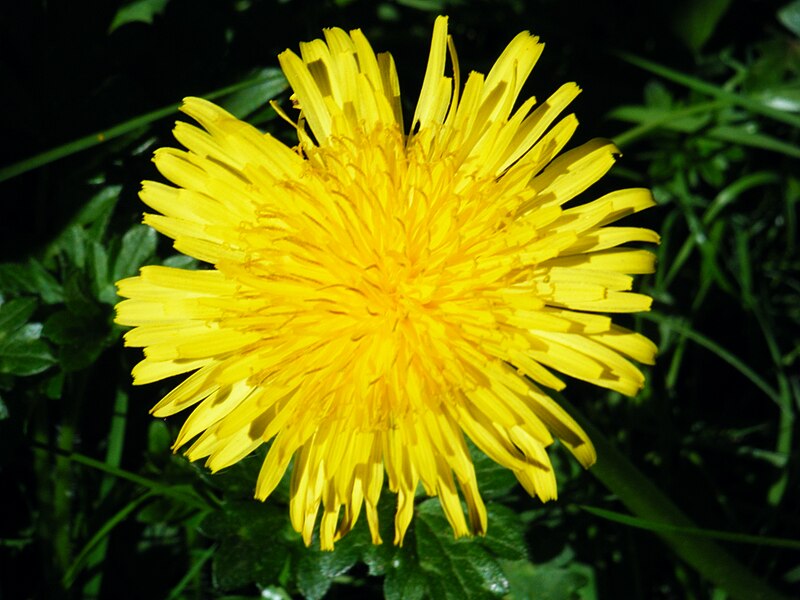
Dandelions. Every part of this plant is edible (as long as they haven't been "treated", in which case they're toxic as can be). Yes, they spread quickly. If you really don't like their sunny yellow faces in your yard, pull them. But read to the end before you decide dandelions are really enemy number 1.
Clover. Clover is a legume, a member of the bean family. Like all legumes, clover is capable of taking nitrogen from the atmosphere and "fixing" it, or putting it into a form that plants can use. Clover in your lawn is good because it fertilizes the grass--so you don't have to. This is good for several reasons. (1) It saves you money. (2) Almost all synthetic fertilizers are over-applied, which creates water pollution downstream as the excess runs off. (3) Synthetic fertilizers require fossil fuels, thus contribute to climate change.
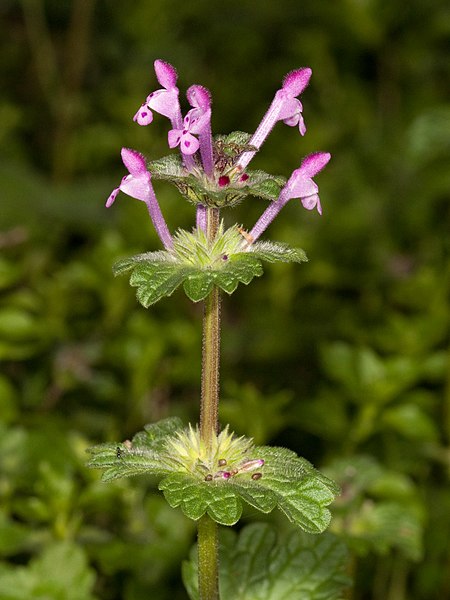
Henbit. Unlike dandelions, henbit is an annual, so each year new plants grow from seeds. It's quick to fill in empty spaces in the lawn and spreads quickly. Henbit is not native to the United States, and many people consider it an invasive weed. But like dandelions, the entire plant is edible. Right now, lawns with dandelions and henbit in them are alive with color.
Most people respond to these dastardly weeds with a spritz of weed-killer. Or better yet, they cover their lawns with pre-emergent in the spring and fall, to prevent those unwanteds from ever growing a cotyledon.
Ever stopped to think about just what those chemicals are? If they're designed to kill plants, what do you think they're doing to you? No, you're not a plant, and you lack some of the cellular structures plants possess. But that doesn't mean these chemicals are harmless. Far from it.
But that's not what this post is about. Eliminating those weeds decreases biodiversity. Living in a house surrounded by a rigorously-maintained carpet of grass is like living in a biological desert. Why? Because different kinds of plants are covered with different kinds of microbes. Without a diversity of plants, we lack a diversity of microbes.
Living in a place devoid of microbes might sound good, but from a health standpoint, it's a problem.
A really big problem.
You see, microbes help us in many ways (probably more than we even suspect at the moment, since this is a fairly recent area of research). They provide us with nutrients, crowd out the germs that can make us sick, and prime our immune systems.
It's looking more and more like we need microbes, specifically the ones found outside in the soil and on plants and in biologically diverse areas. Exposure appears to train the immune system, teaching it what's in the environment--teaching it what poses a threat and what's not worth a response.
People who lack that exposure to a wide range of environmental microbes have immune systems that are overactive. Because those immune systems have never learned what's safe and what's a threat, they are primed to attack everything.
The result: asthma and allergies. And more recently, researchers have learned that other diseases, including multiple sclerosis, Crohn's disease, even some forms of depression, may have roots in an improperly-primed immune system, too.
So back to that lawn care letter. What "threat" lurks in my lawn? Certainly not the weeds, nor the microbes with which they associate. That so-called "treatment", on the other hand, just might qualify.
Sort of.
Actually, it was more frustrating than anything else.
When it arrived, I had just wrapped up an article on the hygiene hypothesis--the idea that our lives are excessively clean, a lifestyle that is thought to have given rise to an increase in health problems, including asthma and allergies.
Are we overly clean? Probably. And the end of my article addresses that (I'll link to it once it's published). But what really grabbed me as I researched the story is the importance of biodiversity in keeping us healthy.
What does this have to do with that lawn care envelope? The so-called "threats" to the lawn are nothing more than biodiversity. I'll get to why biodiversity is so important in just a second, but first let's look at a couple of specific "threats":
 |
| source |
 |
| source |
Clover. Clover is a legume, a member of the bean family. Like all legumes, clover is capable of taking nitrogen from the atmosphere and "fixing" it, or putting it into a form that plants can use. Clover in your lawn is good because it fertilizes the grass--so you don't have to. This is good for several reasons. (1) It saves you money. (2) Almost all synthetic fertilizers are over-applied, which creates water pollution downstream as the excess runs off. (3) Synthetic fertilizers require fossil fuels, thus contribute to climate change.
 |
| source |

Most people respond to these dastardly weeds with a spritz of weed-killer. Or better yet, they cover their lawns with pre-emergent in the spring and fall, to prevent those unwanteds from ever growing a cotyledon.
Ever stopped to think about just what those chemicals are? If they're designed to kill plants, what do you think they're doing to you? No, you're not a plant, and you lack some of the cellular structures plants possess. But that doesn't mean these chemicals are harmless. Far from it.
But that's not what this post is about. Eliminating those weeds decreases biodiversity. Living in a house surrounded by a rigorously-maintained carpet of grass is like living in a biological desert. Why? Because different kinds of plants are covered with different kinds of microbes. Without a diversity of plants, we lack a diversity of microbes.
Living in a place devoid of microbes might sound good, but from a health standpoint, it's a problem.
A really big problem.
You see, microbes help us in many ways (probably more than we even suspect at the moment, since this is a fairly recent area of research). They provide us with nutrients, crowd out the germs that can make us sick, and prime our immune systems.
It's looking more and more like we need microbes, specifically the ones found outside in the soil and on plants and in biologically diverse areas. Exposure appears to train the immune system, teaching it what's in the environment--teaching it what poses a threat and what's not worth a response.
People who lack that exposure to a wide range of environmental microbes have immune systems that are overactive. Because those immune systems have never learned what's safe and what's a threat, they are primed to attack everything.
The result: asthma and allergies. And more recently, researchers have learned that other diseases, including multiple sclerosis, Crohn's disease, even some forms of depression, may have roots in an improperly-primed immune system, too.
So back to that lawn care letter. What "threat" lurks in my lawn? Certainly not the weeds, nor the microbes with which they associate. That so-called "treatment", on the other hand, just might qualify.
Wednesday, January 26, 2011
Adding a touch of realism
Setting is hugely important, and I think we owe it to our readers to make the setting as realistic as possible. Why provide details that are inaccurate? It's sloppy writing. It happens all the time in movies (monkeys giving chimp calls drive me crazy); the prevailing opinion seems to be that no one will notice. But the people who know will notice. And they won't like it.
Given that people learn historical and scientific facts from media (movies and books), we owe it to our audience to at least teach them something that's accurate.
Unless you're writing fantasy, chances are you want to lend a hint of realism through your setting. Something as simple as a cardinal singing in a jack pine can help bring a scene to life. But what if cardinals don't actually live in said location? Or jack pines for that matter? Well, now you can find out for sure, without booking a plane ticket, driving all day, or pestering your facebook friends who live kinda-sorta near there.
Discover Life is a fabulous site to use to research plants and animals of all kinds (something you may need to do whether you write fiction or non-fiction; I found the site while researching a non-fiction article). The site has a mapping feature that allows you to enter the type of organism and search for places where it has been recorded.
The easiest way to use Discover Life is to search for the plant or animal on their home page. (If you have trouble, google the species by common name, then copy and paste the genus species epithet—e.g. Cardinalis cardinalis for cardinal—into the search box.) Most of the species pages come up with a map of locations. Each point on the map is the location where a specimen was collected by a scientist; all are registered with various official museums and collections, so you know the information you're getting is accurate.
If you've got a cardinal singing in the jack pine, let's hope your story isn't set in Idaho. Neither cardinals nor jack pines can be found there. This resource can save you from an embarrassing email from an Idaho-based fan one day.
How do you think you might be able to use Discover Life to bring some realism to your work?
Given that people learn historical and scientific facts from media (movies and books), we owe it to our audience to at least teach them something that's accurate.
Unless you're writing fantasy, chances are you want to lend a hint of realism through your setting. Something as simple as a cardinal singing in a jack pine can help bring a scene to life. But what if cardinals don't actually live in said location? Or jack pines for that matter? Well, now you can find out for sure, without booking a plane ticket, driving all day, or pestering your facebook friends who live kinda-sorta near there.
Discover Life is a fabulous site to use to research plants and animals of all kinds (something you may need to do whether you write fiction or non-fiction; I found the site while researching a non-fiction article). The site has a mapping feature that allows you to enter the type of organism and search for places where it has been recorded.
The easiest way to use Discover Life is to search for the plant or animal on their home page. (If you have trouble, google the species by common name, then copy and paste the genus species epithet—e.g. Cardinalis cardinalis for cardinal—into the search box.) Most of the species pages come up with a map of locations. Each point on the map is the location where a specimen was collected by a scientist; all are registered with various official museums and collections, so you know the information you're getting is accurate.
If you've got a cardinal singing in the jack pine, let's hope your story isn't set in Idaho. Neither cardinals nor jack pines can be found there. This resource can save you from an embarrassing email from an Idaho-based fan one day.
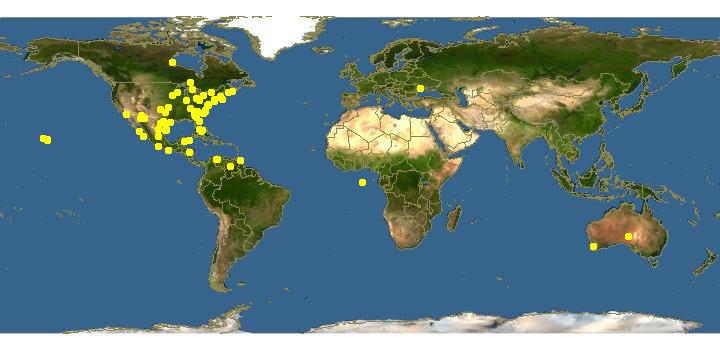 |
| Northern Cardinal |
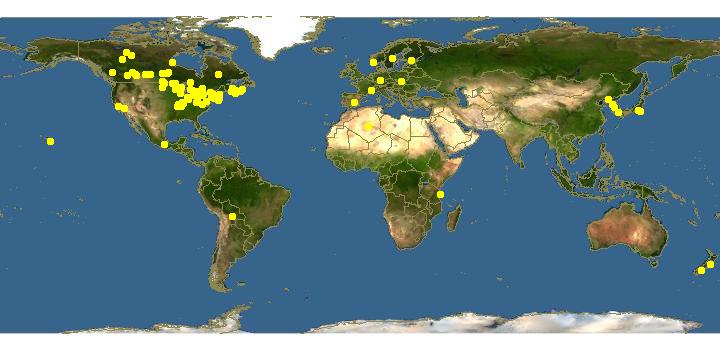 |
| Jack Pine |
Wednesday, January 12, 2011
No, I'm not delusional
In case anyone thought I was delusional when I said I've decided to make writing my new career, I'm not. I know it will take hard work and dedication. To get started, I am focusing on non-fiction: magazine articles to build up my CV. I have also started writing up proposals for educational publishers. I do not think my MG novel will be the next Harry Potter (although that would be lovely).
Writing non-fiction for magazines is actually a terrific way to get your foot in the proverbial door to publication. And yet... I have found very few resources that focus on writing non-fiction for children. Information on writing for magazines is targeted to an adult audience; information about writing for children is usually geared toward fiction writers. What I'm trying to do is somewhere in between.
How then, to begin? Well, I've been diligent about reading my Children's Book Insider and SCBWI Bulletin when they come out (this is one of my resolutions for the year—to make use of the information while it's still fresh and relevant).
I've written several articles on topics that are listed under "current needs" for their magazines. And I have done my homework by (1) reading every last letter of the submissions guidelines and (2) checking out old copies of said magazines from the school library. The latter has helped a great deal in terms of writing style, and the former I somehow failed to do for one of my first submissions (either that, or Highlights changed their submission requirements after I submitted; I suspect it was my error and the form rejection was a nice stinging reminder to pay closer attention).
I must say that the Children's Book Insider and the SCBWI Bulletin are essential tools for the children's author. If you write for children (or want to), you need them. I recommend both, since publishers advertise information in one, but typically not in both, at least not at the same time.
How have you found writing opportunities?
 |
| source |
Writing non-fiction for magazines is actually a terrific way to get your foot in the proverbial door to publication. And yet... I have found very few resources that focus on writing non-fiction for children. Information on writing for magazines is targeted to an adult audience; information about writing for children is usually geared toward fiction writers. What I'm trying to do is somewhere in between.
How then, to begin? Well, I've been diligent about reading my Children's Book Insider and SCBWI Bulletin when they come out (this is one of my resolutions for the year—to make use of the information while it's still fresh and relevant).
I've written several articles on topics that are listed under "current needs" for their magazines. And I have done my homework by (1) reading every last letter of the submissions guidelines and (2) checking out old copies of said magazines from the school library. The latter has helped a great deal in terms of writing style, and the former I somehow failed to do for one of my first submissions (either that, or Highlights changed their submission requirements after I submitted; I suspect it was my error and the form rejection was a nice stinging reminder to pay closer attention).
I must say that the Children's Book Insider and the SCBWI Bulletin are essential tools for the children's author. If you write for children (or want to), you need them. I recommend both, since publishers advertise information in one, but typically not in both, at least not at the same time.
How have you found writing opportunities?
Subscribe to:
Posts (Atom)