I used to be a beekeeper. So when I learned about the
50,000 dead bumble bees in Oregon, I was disturbed. But not just because of my affinity for bees. I'm currently teaching an environmental psychology class, and we just wrapped up a unit on biopsychology and neuropsychology--the study of how internal body processes and brain function affect behavior. We specifically looked at the effect of toxins on those systems. Toxins like neonicotinoids and other pesticides.
Let's look at the big picture, shall we?
The trees in the Oregon Target parking lot were sprayed to kill off aphids, which produce a sticky substance. The trees were sprayed so that customers' cars wouldn't get drops of the sticky stuff on them. It was a purely cosmetic application of the pesticide--as opposed to applications that support food production or human health.
Tragically, those 50,000 bees likely represented over 300 colonies of bees. As Mace Vaughan of the
Xerxes Society notes, "Each of those colonies could have produced multiple new queens that would have gone on to establish new colonies next year." Which means the full impact of this event will be far greater than the initial death toll.
Why should you care about a bunch of bumble bees? To start with, they're the only bee that can pollinate tomatoes. Honey bees can't do it. They're unable to shake the pollen free. But bumble bees vibrate their bodies against flowers (a process called buzz pollination), which loosens the pollen. If you like tomatoes (and pizza and spaghetti and salsa and anything else with tomatoes in it), you need bumble bees.
Whole Foods recently made the extent of our dependence on honey bees (specifically)
visual by removing all bee-pollinated items from the produce section.
Striking, isn't it? That's just honey bees. And that's just the produce section. The dairy section would be all but empty, because the alfalfa that farmers feed their dairy cattle is pollinated by bees. And then there are all the other foods that use bee-pollinated crops as ingredients. Honey nut cereal for breakfast? Forget the honey. And the nuts. No apple cinnamon anything, either.
So how did the event in Oregon happen, anyway? What is it about pesticides that people feel free to use them with abandon, even on things that can't harm us? How did it become the norm in our country to spray everything, just because it might have an insect on it?
God forbid a leaf might have a hole in it, particularly when Americans spend 90% of their time indoors and don't actually take a close look at said leaf.
But Americans happily fork over a monthly payment to the lawn care company to come and spray their yard. It's necessary for a healthy lawn, the company says.
Is it?
No.
According to the
UNL Pesticide Education Office, those monthly contracts keep the company's income on even keel. That's all.
It's not for the good of your lawn. It's for the good of the company's bottom line.
Hmm.
Ever stop to think about what, exactly, they're putting on your yard when they come to spray? Or how it works? Let's take a look at the stuff they sprayed on the trees in Oregon.
Neonicotinoids act as a neurotoxin. Neurons work by opening
and closing ion channels on the cell membrane. By shuttling ions (charged atoms)
into and out of the cell at very high speed, neurons are able to "fire"
or send signals to other neurons, muscle cells, or other parts of the
body. Neonicotinoids work by holding those channels open. Ions
continuously flood across the cell membrane, causing paralysis and
death.
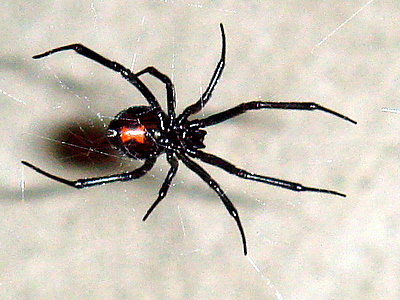
(Incidentally, black widow venom acts by causing an explosive release of neurotransmitter, which binds to ion channels, forcing them to stay open. The result is paralysis and death. Would you spray black widow venom on your yard to make it look good? I think not.)
Neonicotinoids are highly toxic and accumulate in the environment. A
recent study by Dave Goulson at the University of Sussex shows that neonicotinoids have a three year half-life (that means it takes three years for half of the compound to break down). He estimates that when the compound is reapplied one year after the initial application, there is still 80% from the year before in the soil.
Bee scientists, including Marla Spivak at the University of Minnesota are
calling for a change.
We need to plant pollinator gardens--everywhere. In our yards, in our cities, surrounding our farms. And those spaces must be free of pesticides. No herbicides, no insectides, no rodenticides or fungicides. All of these are toxic to the pollinators we need for our survival.

What can you do?
Join the Xerces Society's
Bring Back the Pollinators Campaign:
sign the pledge, then order a
pollinator habitat sign to let people know what you're doing.
There is no place for cosmetic use of pesticides. Not in our lawns and gardens. Not in our cities and shopping areas.
Not any more.
Our lives quite literally depend on it.
How, then, do you prevent insect pests from destroying your garden?
Biodiversity. A diverse planting attracts predatory insects that keep the pests down. It attracts birds that eat the pests. It promotes a healthy ecosystem in your yard, so that no pest species has the opportunity to reproduce to such large numbers that they can decimate your favorite plants.
And if you plant regionally native plants, you won't need to fertilize them. You'll rarely need to water them. Your garden will be both beautiful and pollinator-friendly. It will boost your immune system and lower stress.
Eliminating pesticides used for cosmetic purposes is the single easiest thing you can do to help the planet while also helping your wallet and your health.
I think it's time, don't you?


 What can you do?


