Showing posts with label change. Show all posts

Thursday, January 2, 2014

A fresh start

Happy New Year!


May you unearth treasure in the coming year!
It's a quiet time of year around here (if you don't count the invisible-nunchuck swinging children dancing around my living room as I write this). It's a time of reflection--looking back on the past year and taking stock of how well I worked toward my goals, devising a plan to further them in the coming year, and adding new goals to replace those I accomplished.

Here's hoping we all succeed in accomplishing what we set out for ourselves this year.

What do you hope to accomplish?

Monday, July 1, 2013

An ounce of prevention

I used to be a beekeeper. So when I learned about the 50,000 dead bumble bees in Oregon, I was disturbed. But not just because of my affinity for bees. I'm currently teaching an environmental psychology class, and we just wrapped up a unit on biopsychology and neuropsychology--the study of how internal body processes and brain function affect behavior. We specifically looked at the effect of toxins on those systems. Toxins like neonicotinoids and other pesticides.

Let's look at the big picture, shall we?

The trees in the Oregon Target parking lot were sprayed to kill off aphids, which produce a sticky substance. The trees were sprayed so that customers' cars wouldn't get drops of the sticky stuff on them. It was a purely cosmetic application of the pesticide--as opposed to applications that support food production or human health.

Tragically, those 50,000 bees likely represented over 300 colonies of bees. As Mace Vaughan of the Xerxes Society notes, "Each of those colonies could have produced multiple new queens that would have gone on to establish new colonies next year." Which means the full impact of this event will be far greater than the initial death toll.

Why should you care about a bunch of bumble bees? To start with, they're the only bee that can pollinate tomatoes. Honey bees can't do it. They're unable to shake the pollen free. But bumble bees vibrate their bodies against flowers (a process called buzz pollination), which loosens the pollen.  If you like tomatoes (and pizza and spaghetti and salsa and anything else with tomatoes in it), you need bumble bees.

Whole Foods recently made the extent of our dependence on honey bees (specifically) visual by removing all bee-pollinated items from the produce section.


Striking, isn't it? That's just honey bees. And that's just the produce section. The dairy section would be all but empty, because the alfalfa that farmers feed their dairy cattle is pollinated by bees. And then there are all the other foods that use bee-pollinated crops as ingredients. Honey nut cereal for breakfast? Forget the honey. And the nuts. No apple cinnamon anything, either.

So how did the event in Oregon happen, anyway? What is it about pesticides that people feel free to use them with abandon, even on things that can't harm us? How did it become the norm in our country to spray everything, just because it might have an insect on it?

God forbid a leaf might have a hole in it, particularly when Americans spend 90% of their time indoors and don't actually take a close look at said leaf.

But Americans happily fork over a monthly payment to the lawn care company to come and spray their yard. It's necessary for a healthy lawn, the company says.

Is it?

No.

According to the UNL Pesticide Education Office, those monthly contracts keep the company's income on even keel. That's all.

It's not for the good of your lawn. It's for the good of the company's bottom line.

Hmm.

Ever stop to think about what, exactly, they're putting on your yard when they come to spray? Or how it works? Let's take a look at the stuff they sprayed on the trees in Oregon.
 
Neonicotinoids act as a neurotoxin. Neurons work by opening and closing ion channels on the cell membrane. By shuttling ions (charged atoms) into and out of the cell at very high speed, neurons are able to "fire" or send signals to other neurons, muscle cells, or other parts of the body. Neonicotinoids work by holding those channels open. Ions continuously flood across the cell membrane, causing paralysis and death.
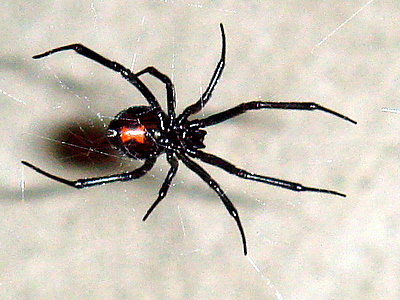
(Incidentally, black widow venom acts by causing an explosive release of neurotransmitter, which binds to ion channels, forcing them to stay open. The result is paralysis and death. Would you spray black widow venom on your yard to make it look good? I think not.)

Neonicotinoids are highly toxic and accumulate in the environment. A recent study by Dave Goulson at the University of Sussex shows that neonicotinoids have a three year half-life (that means it takes three years for half of the compound to break down). He estimates that when the compound is reapplied one year after the initial application, there is still 80% from the year before in the soil.

Bee scientists, including Marla Spivak at the University of Minnesota are calling for a change.

We need to plant pollinator gardens--everywhere. In our yards, in our cities, surrounding our farms. And those spaces must be free of pesticides. No herbicides, no insectides, no rodenticides or fungicides. All of these are toxic to the pollinators we need for our survival.

What can you do?

Join the Xerces Society's Bring Back the Pollinators Campaign: sign the pledge, then order a pollinator habitat sign to let people know what you're doing.

There is no place for cosmetic use of pesticides. Not in our lawns and gardens. Not in our cities and shopping areas.

Not any more.

Our lives quite literally depend on it.

How, then, do you prevent insect pests from destroying your garden? Biodiversity. A diverse planting attracts predatory insects that keep the pests down. It attracts birds that eat the pests. It promotes a healthy ecosystem in your yard, so that no pest species has the opportunity to reproduce to such large numbers that they can decimate your favorite plants.

And if you plant regionally native plants, you won't need to fertilize them. You'll rarely need to water them. Your garden will be both beautiful and pollinator-friendly. It will boost your immune system and lower stress.

Eliminating pesticides used for cosmetic purposes is the single easiest thing you can do to help the planet while also helping your wallet and your health.

I think it's time, don't you?

Monday, April 1, 2013

Not so far and away

I recently visited "Away"--that place things go when you put them out with the trash, otherwise known as the landfill. It was a really eye-opening experience, and I highly recommend it. Really. It's not at all what you think it will be, and it makes you rethink what happens to all that stuff you throw out (although I do recommend visiting before summer heat hits).

Think recyclables are reclaimed? Think again. It's too dangerous to go through garbage to remove items. So what goes into the trash truck by and large goes into the landfill. Appliances--"white goods"--are the exception. They are removed and the people who left them at the curb are fined (your trash collector will remember you if you leave out items they're not supposed to take). These are deconstructed to reclaim hazardous materials and scrap.

Everything else? Into the day's "cell" it goes (more on that below).

Perfectly good things, like used furniture, clothes that didn't sell in a big sidewalk sale or clearance (really--stores would rather throw them away than allow people--even the needy--to have them for free), and leftover food.

That last one's a huge problem, because it attracts animals by the thousands. In fact, there are so many birds at landfills, they have to be located at least six miles from the airport.

Gulls and starlings--tens of thousands of them.

In 2007, our local landfill kept track of what went in:
16% was compostable
46% was recyclable
Together, 62% of what people threw away could have been put to better use, cut down on animal pests, and saved money. How much money? Over 16 million dollars of what is thrown away each year (in my small city's landfill alone) is recyclable.

Why does that matter? The energy saved by recycling ONE aluminum can will power a computer for three hours. If you want to save energy, recycle.

Ever wonder what happens to those bags of yard waste you leave out? The leaves wind up in huge rows.

Those white things are the bags the leaves came in.

So do grass clippings. Branches go into a brush pile 1.5 stories tall. Then the leaves, grass, and chipped branches are mixed in massive rows about 8 feet wide by 6 feet tall. A special machine straddles the rows, periodically turning the yard waste from the inside out.

A quarter-mile of compost.

The temperature inside gets up to 140 degrees (F), where the landfill employees try to keep it for at least 3 weeks--compost that hot will kill disease pathogens and weed seeds. Months later, they've got mountains of compost that's pretty much free for the taking.

The landfill itself is a carefully engineered, highly organized structure where the trash trucks dump your garbage. They don't back up to a big hole in the ground and let loose. They have to go to that day's "cell" to dump their load, and someone with GPS marks the location. That way, if they ever need to recover something that was thrown out on a certain day, they know where it is. What could you possibly want to recover from a landfill? A diamond ring, maybe. Or a body (sad but true).

Heavy (100,000-pound) equipment compacts the loads. Their goal is to fit 1700 pounds of garbage into one square yard of space. Think about that for a second--just how much garbage they're cramming into landfills that fill within just a few decades.

If everyone composted and recycled, the life of the landfill would almost triple. That's pretty phenomenal.

Want to do your part? Here are some resources for getting started:

Build a compost bin. This can be as easy or as complicated as you want it to be (we have the three-bin one, which is great because we fill one of the side bins and leave it to compost while we fill the other. We put all finished compost in the middle until we're ready to use it). Not for you? Near the bottom of the link are the two simplest methods.

And in case you're wondering, NO, it doesn't smell. Not unless you put in too many "greens" (grass clippings and kitchen waste) and not enough "browns" (dried leaves, paper bags, sawdust, etc.) As long as you've got a good balance, it just smells like soil.

If you're not recycling, start. Check out the programs in your area. Most offer curbside recycling. To make it easy, look for one that doesn't require you to sort. Some take more than others, so do your research and find the ones that accept more recyclable goods.

Frustrated by the things your local companies won't take? (All that food packaging, for instance?)

RecycleCartons takes paper milk and juice cartons. If they're not available close to you (and you don't mind spending a little money now and then), you can mail your cartons in.

TerraCycle takes all kinds of "unrecyclables." Sign up for a brigade (or two or three). TerraCycle pays for shipping for most brigades. The best part? You earn points that can be donated to your favorite school or charity. Want to have a positive impact on your school? Have them set up a station for families to bring in their packaging and turn recycling into a fund-raiser.

Remember, you don't have to do everything at once: even small steps make a difference. But often people who start with small steps decide to take additional steps once they realize it's really not all that difficult or painful. I hope that's true for you.

What's your first step going to be?

Monday, March 18, 2013

Change can be good

I've been working toward becoming a Climate Master -- an expert (of sorts) on all things related to the climate and our environment. It's a lot like the Master Gardener program, just with a different focus. I've learned some pretty incredible things, and I'm going to spend the coming weeks sharing them here.

My main focus will be on things you can do to reduce your impact on the environment. And if you don't really care about the environment, or don't accept that humans are changing the climate, those things will still help you save money and eat healthier.

Change can be good--individually, locally, and globally.

Do you need to take out a second mortgage to install geothermal or solar? No. Do you need to trade in your car for a hybrid or electric? Nope. They're great if you can afford them, but they're not necessary.

See, change doesn't have to be difficult. It doesn't have to cost a lot of money. Change for the better can be as simple as a series of small steps that cumulate to become something greater. If everyone commits to making small changes, just think what our collective actions can do.

coremediagroup (source)

So to get you thinking, here's a breakdown of how a typical U.S. household uses energy (from Energy Savers):
45% - heating
18%  - water heating
9% - cooling (e.g., air conditioning)
6% - computers and electronics
6% - lighting
5% - other
4% - cooking
4% - refrigeration
3% - wet cleaning

How can you easily reduce your household energy use? 
  • Heating your house is by far the biggest chunk of that bill--Turn down the heat! For every degree you lower your heat, you save 3% off your heating bill. Set your daytime temperature at 68 and wear a sweater.
  • Get a programmable thermostat (one that's easy to program). Use it to turn the heat down 8 degrees at night, when you're bundled up under a pile of blankets (yes, if you're doing the math, that would be 60). Then have the heat kick in about 30 minutes before you get up, so the house isn't freezing.
  • Wrap your water heater with an insulating blanket. Yes, touching your water heater can be scary if you haven't done it before, but the insulation will make a big difference.
  • Hang your clothes to dry. This one is a huge energy saver. If you live in a dry area with lots of sun, you clothes will be dry in about the same amount of time as using the dryer, but with zero emissions and zero addition to your electric bill. (As an added bonus, sunlight will erase vegetable- or fruit-based stains. For serious, try it out sometime. It doesn't work on grease or dirt, but other stuff, like tomato or blueberry? Sunlight, baby, all the way.)

Those are things that will put a big dent in your utility bill. Line-drying clothing in summer will also help reduce the energy needed during peak times, which will help prevent an overloaded electric grid. That reduces the need to build new power plants, which saves you money in the long run (since the power company will pass on those costs to their customers).

See? Small, painless, and puts money back in your wallet.

Monday, February 4, 2013

Putting warmer winters to good use

I've been trolling the garden catalogs lately. Seems to happen this time of year, when a burst of warm days catches everyone by surprise, although early spring seems to be rapidly becoming the norm. Even the groundhogs say so.

Punxatawney Phil's not the only game in town.
Meet Unadilla Bill. (source)
This year, as we enter our second spring in our home, my husband and I (well, mostly me) are determined to do something with the front yard. The grass pretty much died last year. Drought does that. And I must admit, I encouraged it. I tried to kill off a couple of shrubs, too, but they were hardier than I'd expected.

My husband and I want a beautiful flowering, fruit-producing tree out front, surrounded by beautiful, habitat-producing native plants. The tree's the sticking point, though. We really want to put in a Mexican plum.

Mexican plum trees in full bloom by TexasEagle.
Lovely aren't they? (source)
Why choose a tree that grows naturally in our state but is nowhere to be found in local nurseries? Several reasons, actually.

They are drought tolerant. (Number one biggest criterion: check!)

They are native to our region. (Number two biggest criterion: check!)

They like full sun. (Important when putting a tree on the south side of the house.)

But for some reason, they are listed as doing best in zones 6-8. (If you're not a gardener, all you need to know is that the country is divided into zones, depending on how cold it gets in winter, and plants are grouped depending on their cold tolerance.) My husband and I live in zone 5, which means winters would be too cold for this tree.

That's not so good. Because this tree seems perfect in every other way.

Then I stumbled on this. Unfortunately, I can't import it into the blog, but it's worth the jaunt over to the Arbor Day Foundation to check out the animation. Seriously. It's pretty eye-opening. I'll wait.

Incredible, isn't it? The zones are migrating north at a rapid clip, and that animation showed the change over a 16 year period. Only 16 years! Winters aren't getting nearly as cold as they used to. There are some benefits to that (like lower heating bills and planting the plum tree!), and some drawbacks (like flea outbreaks due to lack of a hard freeze to kill off the eggs). 

That's why I'm working so hard to put in regionally native plants that can tolerate the harsher climate we seem to be moving toward. I don't want my yard to turn brown in summer. I want it to be full of color and life.

Curious about what kinds of trees and plants would be native to your area?

There are a couple of great resources that I use on a regular basis. The Arbor Day Foundation has a searchable tree database based on where you live (caveat: they only list the trees they carry in their nursery, so you might not find what you're looking for, but it's a good starting point).

My favorite resource is the Lady Bird Johnson Wildflower Center, which has lists of recommended species for each state and for all kinds of native plants.

Have you noticed a warming trend in the winters? How has it affected you?

Monday, January 14, 2013

It lives!

Those were my husband's words when the 4YO bounded down the steps, chattering away like a happy, non-feverish child (for the first time in a couple of days--thank you flu virus, for invading our house before our vaccines could take effect).

Like a child awakening from a long, feverish delirium, the blog is making a similar comeback. It might be sluggish at first, or it might burst with energy like the 4YO. I really don't know how that's going to play out--it will be interesting to see.

I was actually planning to get back to blogging right at the start of the year. I sat down, ready to write a post about my goals for 2013, when a friend sent me this:


How could I possibly share my goals with the world--or the very small part of it that stops by here (I love you all for doing so)--when sharing them would stop me from accomplishing them? Then I realized that not posting about my goals was stopping me from accomplishing at least one goal--blogging. Make of that what you will.

But here I am! I do plan to get back to blogging. Be forewarned that the topic of my posts will focus less on writing (thought there will be some--always) and more on environmental stuff.

Don't worry. You will not find any out-to-scare-the-pants-off-you posts about how the world is going to end if you don't sell your car and become a vegetarian. Not here. I promise. Doomsday predictions accomplish nothing but an overuse of hashtags (#apocalypse, anyone?).

I'm all about sharing the latest research on changes we can make to improve our lives. And not only ours, but the lives of our kids and their kids and generations to come.

I realize it's infinitely easier to keep on keepin' on, but I'm not talking about major changes. I'm talking about small things. Things you can do at home, at a local school, in your town or city. Things that will benefit YOU. The kinds of things that will reduce stress, improve health, make your neighborhood safer, and save you money (zoiks, I sound like a used-car salesman). Things that will make life different--but better. Really.

But as I said, it won't just be about the environment. I'm sure I'll share my new writing set-up soon (because I loves it, Precious, loves it). I have a delightful author lined up for a new Marketing Monday. And I'll be unveiling my new citizen science project soon, too.

Welcome to the 14th ba'k'tun! It's a brand new world (literally, for the Maya). What wonderful things is it bringing you?

Monday, May 14, 2012

Changing, growing

If you've spent any time reading this blog, you'll know I like to garden. I waited ten years to have a garden of my own (container gardening, while nice, only gets you so far). So one of the first things I did when we moved into our house last fall was to tear out the grass along our fence line and put in native grasses and perennials.

Okay, it wasn't just me. Beloved Husband and both kids helped. It was a ton of work, but well worth it, because we now have this:


The neighbors, who thought we were crazy when we started, have all commented on how much they love it. And I love that it will change as the season progresses. By mid-summer, it will have lots of yellow and orange flowers blooming, and by fall, the grasses will be tall and all shades of yellow, gold, and red, some with feathery pink seed heads.

Yesterday, I was pulling weeds (yes, I pull them by hand, more on that in a moment) to the susurrus of baby cardinals begging for food in our lilac. As long as I kept my head down, the parents were content to come and go. I also discovered a bumblebee nest behind that pinkish plant in the foreground (Penstemon, for anyone who's curious).

Weed-pulling: a back-breaking, mindless waste of time, right? Lots of people think so, but I enjoy it. (Now you know why our neighbors think we're nuts.) I like it for many reasons.
  • It's hard work, but at the end of the day, I can look at the planting bed and see the results. There's very little instant gratification in writing.
  • It's back-breaking, but in a different way from writing. it stretches muscles that sit for too long when I write, so in a way it's soothing. Besides, there's something satisfying about going to bed a bit sore from a hard day's work. And I sleep better.
  • It's mindless, which gives my brain a break from constant focus and thought. The inability to sustain focus on something for a prolonged period of time (or the increasing difficulty in doing so as time progresses) is called directional attention fatigue, and studies show that exposure to nature is the best way to allow the brain to recoup and revitalize (source).
  • It's inspirational. A good many of my magazine article and picture book ideas (the non-fiction ones) are based on things I have seen while gardening or spending time outside. Gardening is also the perfect opportunity to figure out what, exactly, that random thing that just happened in my novel really means, and how it will play out later in the story (or if I should get rid of it).
And then there are encounters like these. How can you not love seeing something like this?

eastern swallowtail butterfly
Do you garden? What do you like about it? And if not, why not?


Friday, January 20, 2012

New arrival

This week is one of change. We've been thinking about getting a dog for a while now, but the local Humane Society has very few and those that come in are usually gone the next day. So when my husband pulled up their web site and found this guy, we knew we had to act fast.


Meet Koda (who, incidentally, looks a bit like Yoda). He's adjusting to life in our family with terrific speed, and we're just so glad to have him. Somehow, it feels like a home, now that he's here.

Do you have pets? What's your favorite thing about them?

Friday, September 23, 2011

Doing it right

On Monday, I wrote about Livia Blackburne's thoughts about blogging to reach your audience. Her post dovetailed with a brief social media session Mitali Perkins held at Chautauqua. Mitali's had me thinking ever since. Specifically, I've been wondering about this:

How can you contribute to children's writing in a way that sets you apart? 

Lots of writers blog about writing. It helps us to connect with other writers, and perhaps to the intended audience. But if someone has the option to follow what a well-known, established author writes versus someone just starting out, which would they choose? As writers, we need to create our niche in the blogosphere.

Mitali suggests brainstorming (free write in a journal) what you want to contribute. Ideally, you do this before you even begin your blog, but you can always modify your content as you go.

Blog about things that serve kids and parents. What are you passionate about? Are there topics that come up again and again in your writing? Themes that weave through your work? Blog about those kinds of topics. Discuss related children's books or activities; provide them with resources.

Mitali does this at Mitali's Fire Escape: a safe place to chat about books between cultures. She blogs about writing, but she also writes posts about the issues that appear in her books. She provides resources for readers, so they can find out more about a topic or even find a way to help. These posts are for kids, parents, and teachers - the audience.

Me? I'm passionate about science, nature, and grappling with complex problems that don't have a black and white solution. It's important to me that everyone see both sides of an issue (which happens all too seldom these days). All of those things come up in my writing. To reach my intended audience, Mitali said I should blog about other nonfiction books, fiction books that cover similar kinds of topics, and science-y activities that kids and parents can do together; things they can do to make a difference.

How do you let your intended audience know about your posts? Send out provocative twitter posts that link to the blog post, and reach out to the audience you want to reach. Mitali has lists of people involved in the issues she writes about. Find your audience. Let them know you're there. Give them a reason to stop by.

For me, that means you will be seeing new kinds of posts. Posts about terrific books, posts about important subjects, posts about things kids (and teachers and parents) can do to get involved. I will also write a bit about writing (there's still lots to share from Chautauqua), but that won't be all I blog about.

How will you change the way you blog?

Tuesday, July 12, 2011

Life in 300 square feet

We (my husband, two children, and I) have spent the past four weeks living in small spaces: the two weeks before the move in a small one-bedroom apartment in Berlin, the last two weeks in an equally small one-room hotel suite. As the woman in Julia Donaldson's A Squash and a Squeeze would put it, it's titchy for four.

So what have we been up to since returning Stateside? Lots o' things...
  • we bought a car (we hadn't planned to)
  • we spent four hours in the ER with our 3-year-old (hadn't planned that, either)
  • we decided against the house we were sure we wanted before we moved and wound up looking at about 25 more
  • we refereed countless numbers of fights between two boys who could use a little more distance from each other
  • we discovered that the Great Plains can be hot and humid and rather miserable at times, and, consequently, came to accept the necessity of air conditioning
  • we went to the Farmer's Market, discovered burpless cucumbers, and sampled real maple syrup by the spoonful
  • we spent time hanging out in the (THE!) indie bookstore in town
  • we had decent margaritas and Mexican food for the first time in years
  • we went for walks in the nearby park and watched the curious fireflies check out our curious children
  • we found a place to call home
And on Saturday, I head to Chautauqua for the Writers Workshop! I can't wait to get my head back into writing. It's been far too long.

Check back on Monday for the first part of a terrific guest post by Katie Davis--Marketing Monday at it's finest!

Saturday, December 11, 2010

New look!

If you're looking for Wistful Wanderings, you've found it. I initially chose that blog name because it reflected what I was writing at the time: travel adventure stories for kids.

Over the past year, my writing repertoire has broadened and my picture book focus has shifted to animal and ecology-based topics.I decided it was time my blog reflected my work. Thanks to my  husband for the gorgeous photo.

Wishing you all the best this holiday season. See you in January!

Friday, September 10, 2010

Schooling In

From http://www.schule-ivenack.de/
What, you ask, is that? An overgrown carrot decorated by someone with too much time on their hands? A giant candy corn for those who can't wait to celebrate Halloween? A prize for the fastest horse, or simply a wish for good luck?

That, dear readers is a Schultüte. It is THE symbol of the start of school for the youngest students here in Germany. The excitement surrounding the Schultüte is comparable to that of finding a stocking filled with goodies on Christmas morning. Children make requests for certain themes (they come in all sizes, colors, and themes, but not different shapes—they are always, always a cone), and at the beginning of their first year of school, the students are given their Schultüte as a symbol of their transition into the world of learning.

Once upon a time (or so I have been told), they held school supplies. My elderly neighbor told me how she and her friends found farm produce in theirs (they were farmers' kids—they clearly didn't get enough fresh fruit and vegetables at home, it had to come wrapped in a pretty little cone, too). And more recently, toys and candy. Sometimes enough to require visits to the dentist.

The contents are up to the parents, but the Einschulungsfeier (schooling in ceremony) is a wonderful celebration that marks a major turning point in a child's life. They are no longer learning only from friends and family at home, but they are now embarking on a journey of discovery that will lead them places they never dreamed existed.

I don't even remember my first day of school. It blends in with all of the others. But to honor the occasion with festivities, friends, and family... that's the way to do it, isn't it? To make the transition exciting, appealing, and oh so very fun. To send children into the world to learn with enthusiasm. That's the way to create joyful learners. Perhaps this is a tradition we should celebrate more widely.

If you're looking for Poetry Friday, Anastasia Suen has the roundup this week.

Do you remember starting school? What traditions can you recall?

Wednesday, May 26, 2010

Changes are coming...

The time has come.

After six months of wandering wistfully, I've decided it's time to get creative and improve the blog. Title remains the same (thanks to the kind words of Daine Mayr at Random Noodling), but the appearance is about to undergo a major overhaul.

Don't be surprised when you come back here and it looks nothing like it did before. It's still Wistful Wanderings. I'm still musing about writing and creativity. It'll just look better while I do so. After all, looks count. (Right?)