Thursday, March 29, 2012

Happy, thank you

The other day I had this wonderful, overwhelming sense that all was right with the world. It isn't, of course (I've actually got some rather frustrating things happening in my life right now), so it was particularly delightful to feel so very content with my life.

It made me think of the movie HappyThankYouMorePlease. I love the concept: acknowledge when you are happy, say thanks, and respectfully ask for more of the same. (Exactly who or what you thank depends on your belief system).

I think it's important to pause and be grateful for the good things in life when you've got them. When things go well, it's far too easy to take them for granted. And when they go wrong, it can be hard not to dwell on them. But in my experience, when I stop to acknowledge the good things--to be grateful for them--I tend to get more of the same.

So here are the things for which I am incredibly grateful, in no particular order:
  • Spring is here and the sun is out.
  • The plants I put in last fall survived the very dry winter. Some are already blooming.
  • Trees are flowering everywhere, and the air is perfumed with their scent. It reminds me of springtime in Berlin, which I sorely miss.
  • I am currently working on an article for a science magazine for kids (can't tell you which one, just yet)--it's a fantastic opportunity and lots of fun.
  • An editor asked me to revise and resubmit one of my non-fiction PB manuscripts and gave me an estimated time frame to hear back from him on the revision.
  • I have an amazing group of critique partners and beta readers who have helped me make my work shine; without them the previous item would not have happened. 
  • My mom came to visit and helped me paint the library (a realtor would probably call it the formal dining room, but we keep books there instead of a table).
  • Koda has figured out he's not alpha (he tried for a while, but he's finally realized he's on the bottom rung). Now that he knows his place, he's the sweetest dog we could have hoped for.
  • And of course, my wonderful family, who put up with more than their fair share of craziness with me.
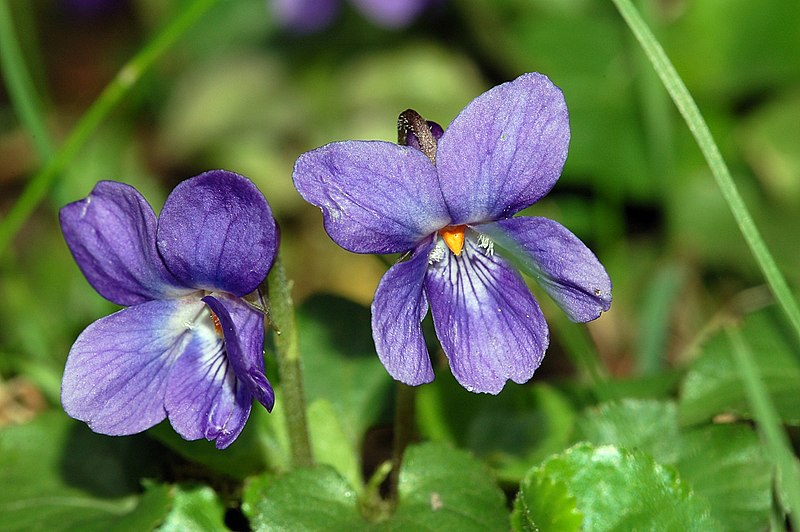
These are growing in my yard--love 'em! (source)

What are you grateful for?

Thursday, March 22, 2012

Not a drop to drink

Thanks for the great comments on Monday's post! I think sometimes people see those of us who advocate for nature as thinking we need to do away with all things tech. Although there may be people like that out there, I'm not one of them. Technology has lots of great things to offer, and it's not going away (nor should it).

I'm simply advocating for incorporating some "nature time" into daily life--half an hour or so to recuperate from a crazy day and find some sense of balance.

And in other news ...

Did you know today is World Water Day?

source

Water day? Why do we need a water day? Personally, I think it's so I can share some mind-blowing facts with you (all but the last are from waterfootprint.org):
  • it takes 109 liters of water to make one glass of wine
  • 15,400 liters of water are needed to produce one kg (just under half a pound) of beef
  • chicken is better at 4300 liters for one kg of meat
  • the average water footprint for one kg of bread is 1608 liters
  • it takes 5060 liters of water to make one kg of cheese
  • a 100-gram chocolate bar requires 1700 liters of water to make
  • 560 liters of water go into growing 1 kg of oranges
  • 1 kg dry pasta takes nearly 1850 liters of water to make
  • one pair of Levi's jeans uses over 3,000 liters of water over its lifetime (from growing the cotton to laundering) (source)
And that doesn't take into account the cooking process, washing up after preparing food, or any other direct use of water involved in food prep. Hmm, makes drought look downright scary, doesn't it? (That's why I write novels about it, mwa-ha-ha-ha-ha!)

I'm actually writing (on the non-fiction side) a profile about the founder of the Water Footprint Network, so World Water Day was timely. There are some amazing graphics (and more mind-blowing facts) on the WFN website--go check them out!


If you had to guess, what part of your day uses the most water?

Monday, March 19, 2012

Where the wild things aren't

Where are the wild things? Not in children's books (or, to be accurate, less so with every decade that passes). So says a team of researchers who studied Caldecott winners and honor books from the past 70 years. The recent study determined that scenes depicting nature have declined steadily over time.

That's not really all that surprising, is it? It mirrors what's happening in our lives. Most children spend the vast majority of their time indoors or in built environments (e.g., cities), so why would we expect characters in books to do otherwise?

And does it really matter, anyway? As one discussant in a recent LinkedIn discussion asked, should we be disturbed by this trend?

source

I'll let you come to your own conclusions on this, but first, a few items of interest.
  • Children who live near natural settings experience less stress. (source)
  • Kids who move to greener locations demonstrate improved cognitive abilities. (source)
  • Kids with ADHD have milder symptoms when they have regular "green time"--time spent in nature. (source)
  • Symptoms of ADHD decrease immediately following a 20-minute walk through a park. (source)
  • Inner-city girls with a view of nature (e.g., trees outside their windows) have greater self-discipline and are better able to concentrate. (source)
  • Areas with trees provide better opportunities for play, and play is an important part of childhood development. (source)
  • Young children who spend time in "outdoor classrooms" have longer attention spans and better motor coordination than children who spend only short periods of time outdoors. (source

source
What if you're all grown up, or don't suffer from ADHD? Not to worry, nature affects adults, too.
  • People living in green areas are less likely to procrastinate, find their problems less overwhelming, and are better able to overcome them. (source)
  • People living in housing near green areas (trees and grass) are less likely to be involved in domestic violence. (source)
  • People living in areas with more natural settings are healthier. (source)
  • Patients with a view of natural scenery recover faster from surgery and request less pain medication. (source)
  • College students with natural views outside their dorm windows are better able to concentrate. (source)
So what do you think? Do you think there's reason for concern?

Thursday, March 15, 2012

Library Fun

I love when I get to experience something unexpected. Most days go by, relatively the same, but every now and then something comes along to shake things up. Like this.

Look who came to our local library:


There's a great horned owl in the children's fiction section. How awesome is that?

The raptor rehabilitators brought others, too, including this screech owl, a European barn owl, and a peregrine falcon. Gorgeous birds that have all been injured in some way (most were hit by a car while hunting). They were rescued but unable to be re-released into the wild.


It was an incredible afternoon with rarely-seen hunters. I'd do it again in a heart-beat.

When was the last time you got close to an animal that wasn't a pet?