Thursday, April 5, 2012

No comprende

I started a Spanish class this week. My 4-year-old son is learning Spanish, and I thought it might be useful to have some idea what he's saying. And it will come in handy when we go to Costa Rica this summer.

There's also the fact that French and German (my other foreign languages) just aren't commonly encountered here in the U.S., but Spanish is everywhere. I think it's important to have at least a grasp of basic words and phrases, and some understanding of other cultures. Yes, the official language here is English, but Spanish--and Spanish-speaking immigrants--are here to stay. It will make life easier for everyone if we all make at least a small effort to understand each other.

It's also humbling to put yourself in the shoes of a person who doesn't speak the local language well. It reminds you that just because they don't speak well doesn't mean they're stupid (which I think a lot of people tend to believe). Far from it. It simply means they don't speak it well, or aren't comfortable doing so.

How do I know? I spent five years as the person who didn't speak the native language. I am an articulate person (when I've had my morning coffee), a well-educated person (I didn't spend six years in graduate school for nothin'). But for the first several years we lived in Germany, I dreaded having to talk to anyone in--gasp--German.

source
Why? Because every time I had to talk to someone about something, one of several things would happen. Early on, my brain would go into its default foreign language mode (French), and I would say some bizarre combination of French and German (once with a little Italian thrown in--don't ask me where that came from). The person to whom I was speaking would look at me like I was an idiot, then automatically switch to English.

As I learned more German, I would carefully figure out how to properly say something, so I knew the other person would understand. I knew I'd come a long way when he/she would respond in German. But then I was stuck, either unable to understand what they had said or unable to figure out how to respond. After a few moments of struggling, the other person would switch to English.

After several years, my level of comprehension improved greatly, but there still wasn't that natural response just forming in my mind. I still wasn't thinking in German, which meant that I had to translate what they had said into English, then translate my English response into German. This process takes time--a few minutes if you want to get all your verbs and modifiers in the right places--and by then I was usually getting one of those looks that made it clear the person thought I was an idiot. And then they would switch to English. Or, if the person didn't speak English, they would wave me off.

It is incredibly humbling to be treated like an idiot when, in fact, you know you are not (usually).

We take communication for granted, particularly here in the United States, where we expect everyone to speak English. Very few people here make the effort to learn another language, unless it is required for school. And I am the first to admit, it is extremely difficult to learn another language when you have no chance to practice using it. The U.S. is a huge country. When you drive from one state to the next, the language stays the same. It's not like Europe, where you go from one country another and change languages. To be like that here, almost every state would need to speak a different language. We just don't have that incentive to learn.

Unfortunately, our lack of willingness to learn another language is viewed negatively by other nations. They resent that we come to their countries and expect them to speak our language. Rightfully so. We expect people coming here to speak English, so we should do them the same courtesy of making an attempt to speak their language. And really, the effort goes a long way.

So now I'm speaking some bizarre combination of German, French, and Spanish (Gernchish? Fremanish? Spamanch?). People will look at me like I'm an idiot when we go to Costa Rica, I'm sure. But I'll get a few words and phrases right, I'll make the effort. And that goes a very long way.

Adiós mes amies. Ich wünchen Ihnen un buenos dias.

What experiences have you had with foreign languages (whether you speak or others were speaking to you)?


Monday, April 2, 2012

Dream vs. reality

Last week, I painted the library in our house. The realtor who showed us the house called it a formal dining room, but what can I say? We like books better than dining sets that get used about twice a year.

Okay, this isn't our library, but I wish it were!

It was supposed to be easy--good quality paint, a single coat, and voila: the library of our dreams. Er, well, not exactly. You see, over the past several days, I've discovered that painting is a lot like writing.
  • The hardest part is to get that first draft coat.
  • Sometimes, when you take a step back, you'll realize that what you thought would be an incredible, amazing story color turns out to be god-awful, and you'll start from scratch with something new.
  • When you think you're done and take a step back to admire your work, you'll find it's full of holes. Some places just need a little touch-up, while others are big enough to drive a truck through. Time to revise apply a second coat.
  • The hardest part is getting the details just right.
  • Sometimes, that brilliant idea that will finish it all off turns out to make the whole thing wrong. So you revert to a previous version of the document paint over it. Unless you run out of paint. (What? It could happen. I'm just saying ...)
  • When the above happens, you can't just throw an alligator through the transom* stick a plant in front of the spot to fix it.
  • All the advice in the world doesn't teach you the craft as well as just doing it. (And redoing it.) 
* chapter 23 of Jack M. Bickman's The 38 Most Common Fiction Writing Mistakes


What has life taught you about writing? And what would your personal dream library look like, if you could build it?

Thursday, March 29, 2012

Happy, thank you

The other day I had this wonderful, overwhelming sense that all was right with the world. It isn't, of course (I've actually got some rather frustrating things happening in my life right now), so it was particularly delightful to feel so very content with my life.

It made me think of the movie HappyThankYouMorePlease. I love the concept: acknowledge when you are happy, say thanks, and respectfully ask for more of the same. (Exactly who or what you thank depends on your belief system).

I think it's important to pause and be grateful for the good things in life when you've got them. When things go well, it's far too easy to take them for granted. And when they go wrong, it can be hard not to dwell on them. But in my experience, when I stop to acknowledge the good things--to be grateful for them--I tend to get more of the same.

So here are the things for which I am incredibly grateful, in no particular order:
  • Spring is here and the sun is out.
  • The plants I put in last fall survived the very dry winter. Some are already blooming.
  • Trees are flowering everywhere, and the air is perfumed with their scent. It reminds me of springtime in Berlin, which I sorely miss.
  • I am currently working on an article for a science magazine for kids (can't tell you which one, just yet)--it's a fantastic opportunity and lots of fun.
  • An editor asked me to revise and resubmit one of my non-fiction PB manuscripts and gave me an estimated time frame to hear back from him on the revision.
  • I have an amazing group of critique partners and beta readers who have helped me make my work shine; without them the previous item would not have happened. 
  • My mom came to visit and helped me paint the library (a realtor would probably call it the formal dining room, but we keep books there instead of a table).
  • Koda has figured out he's not alpha (he tried for a while, but he's finally realized he's on the bottom rung). Now that he knows his place, he's the sweetest dog we could have hoped for.
  • And of course, my wonderful family, who put up with more than their fair share of craziness with me.

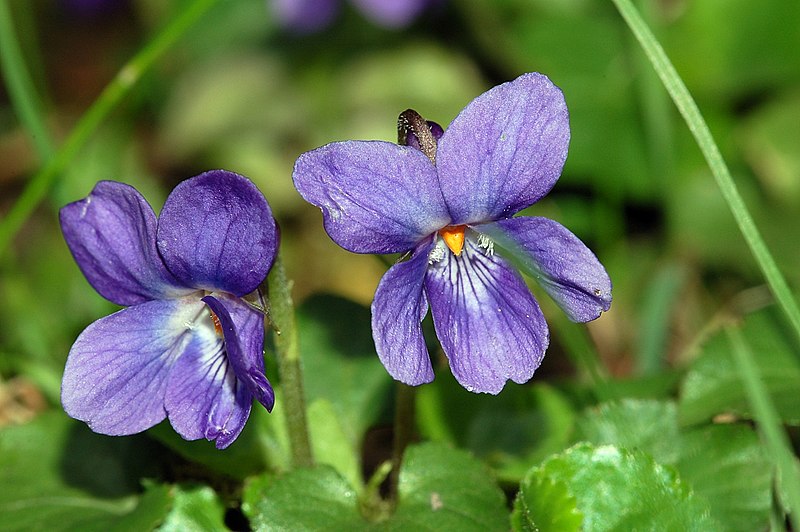
These are growing in my yard--love 'em! (source)

What are you grateful for?

Thursday, March 22, 2012

Not a drop to drink

Thanks for the great comments on Monday's post! I think sometimes people see those of us who advocate for nature as thinking we need to do away with all things tech. Although there may be people like that out there, I'm not one of them. Technology has lots of great things to offer, and it's not going away (nor should it).

I'm simply advocating for incorporating some "nature time" into daily life--half an hour or so to recuperate from a crazy day and find some sense of balance.

And in other news ...

Did you know today is World Water Day?

source

Water day? Why do we need a water day? Personally, I think it's so I can share some mind-blowing facts with you (all but the last are from waterfootprint.org):
  • it takes 109 liters of water to make one glass of wine
  • 15,400 liters of water are needed to produce one kg (just under half a pound) of beef
  • chicken is better at 4300 liters for one kg of meat
  • the average water footprint for one kg of bread is 1608 liters
  • it takes 5060 liters of water to make one kg of cheese
  • a 100-gram chocolate bar requires 1700 liters of water to make
  • 560 liters of water go into growing 1 kg of oranges
  • 1 kg dry pasta takes nearly 1850 liters of water to make
  • one pair of Levi's jeans uses over 3,000 liters of water over its lifetime (from growing the cotton to laundering) (source)
And that doesn't take into account the cooking process, washing up after preparing food, or any other direct use of water involved in food prep. Hmm, makes drought look downright scary, doesn't it? (That's why I write novels about it, mwa-ha-ha-ha-ha!)

I'm actually writing (on the non-fiction side) a profile about the founder of the Water Footprint Network, so World Water Day was timely. There are some amazing graphics (and more mind-blowing facts) on the WFN website--go check them out!


If you had to guess, what part of your day uses the most water?