Monday, February 25, 2013

Death by Snow Day

You know how deadlines tend to cluster? No? Well mine do. And I've got a bunch coming up. So naturally last week was a complete bust in terms of getting any writing done. President's Day on Monday, sick child Tuesday-Wednesday, snow days Thursday-Friday.

Two days off of school for a whopping 6 inches of snow. Every parent I know was tearing their hair out last week. And then yesterday, the local weather people said it would snow from last night until tomorrow.

So far, not a flake. Which is a good thing. School's in session today, and I might actually have a shot at squeaking in under these deadlines. Of course the flip side is that, once again, we're going to get no snow, and we desperately need the moisture.

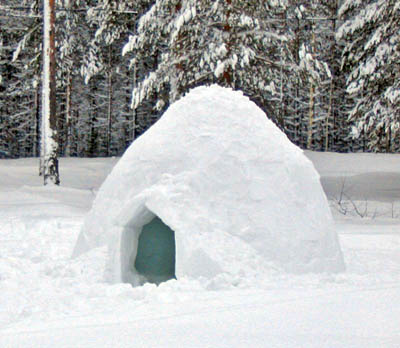
And my boys and I didn't get to build an igloo, which I'd really wanted to do. Because really, if there's no school due to snow, you ought to be able to build an igloo. Don't you think?

source
But on the positive side of things, my article on Concussion came out in Science News for Kids. If your kids are out sledding, playing hockey, ice skating, or doing other winter sports, you might want to check it out.

How do you get work done when life gets in the way?

Monday, February 11, 2013

Staying curious

Saturday was one of those wonderful days when my contributor copies landed in the mailbox. This time it was the March issue of Highlights for Children, which has an article I wrote about a scientist and her research on black howler monkeys.

Black howler monkey by LeaMaimone. (source)

She discovered that they can count, just by listening to the roars of other troops. Very cool stuff. Highlights isn't available online, but I have also written about her work (and research on many other clever critters) in this piece on Animal Cognition, if you'd like to learn more.

Many of the non-fiction pieces I write profile a scientist or scientists and their work--all of my Science News for Kids stories do this, and most of the ones I've written for Highlights, too.

I absolutely LOVE that part of my job. Scientists do the coolest stuff. I mean, who else would think to drag a sled filled with speakers, poles, a tape player, an amplifier, and a boat battery into the Belizian jungle to find out whether or not howler monkeys can count?

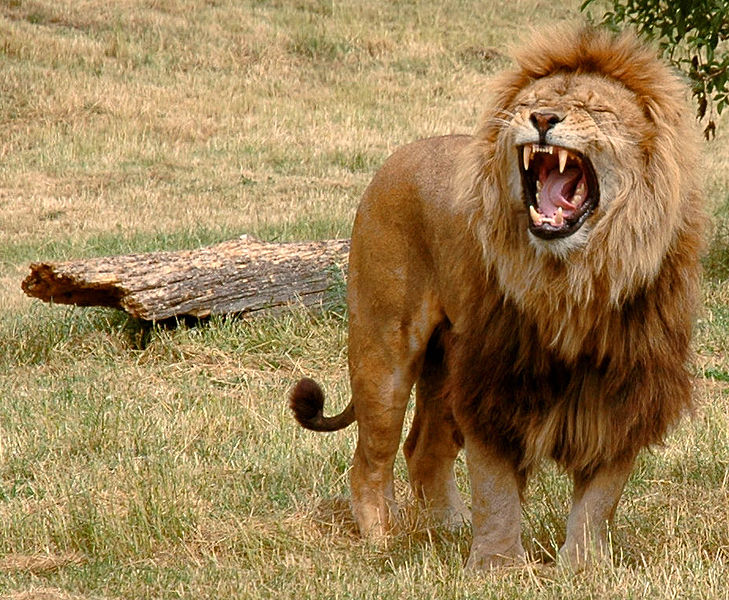
Who else would take life-sized stuffed-animal lions with removable, velcro-able manes into the Serengeti to find out why lions have manes at all? You can find out more about that one in the March issue of ASK (Arts and Sciences for Kids) magazine.

photo by Robek (source)

Scientists look at the world around them and see things they can't explain. They ask interesting questions and design fascinating experiments in their search for an answer. They are the most curious people on the planet, second only to kids. Some are probably more curious than your average kid.

And that's what makes science so much fun.

Which is why I have a hard time understanding why our school kids, who are naturally incredibly curious people, aren't doing well in science. I don't teach in K-12, so I'm not in the classroom to know what activities they're doing to learn about science. I do know that many elementary teachers don't have a background in the sciences, and perhaps that's a contributing factor. I really don't know.

Are we not letting kids observe and ask questions? Not giving them the directed freedom to figure out how to find an answer? Kids are good at that. It comes naturally to them. Just imagine what could happen if we harnessed that potential. All it takes is a creative mind and a supportive atmosphere. Science doesn't have to be costly. Some of the best experiments are incredibly simple.

So why aren't our students performing well on science tests? Scientists are just kids who never lost their curiosity about the world. How can we help our kids keep theirs?


Monday, February 4, 2013

Putting warmer winters to good use

I've been trolling the garden catalogs lately. Seems to happen this time of year, when a burst of warm days catches everyone by surprise, although early spring seems to be rapidly becoming the norm. Even the groundhogs say so.

Punxatawney Phil's not the only game in town.
Meet Unadilla Bill. (source)
This year, as we enter our second spring in our home, my husband and I (well, mostly me) are determined to do something with the front yard. The grass pretty much died last year. Drought does that. And I must admit, I encouraged it. I tried to kill off a couple of shrubs, too, but they were hardier than I'd expected.

My husband and I want a beautiful flowering, fruit-producing tree out front, surrounded by beautiful, habitat-producing native plants. The tree's the sticking point, though. We really want to put in a Mexican plum.

Mexican plum trees in full bloom by TexasEagle.
Lovely aren't they? (source)
Why choose a tree that grows naturally in our state but is nowhere to be found in local nurseries? Several reasons, actually.

They are drought tolerant. (Number one biggest criterion: check!)

They are native to our region. (Number two biggest criterion: check!)

They like full sun. (Important when putting a tree on the south side of the house.)

But for some reason, they are listed as doing best in zones 6-8. (If you're not a gardener, all you need to know is that the country is divided into zones, depending on how cold it gets in winter, and plants are grouped depending on their cold tolerance.) My husband and I live in zone 5, which means winters would be too cold for this tree.

That's not so good. Because this tree seems perfect in every other way.

Then I stumbled on this. Unfortunately, I can't import it into the blog, but it's worth the jaunt over to the Arbor Day Foundation to check out the animation. Seriously. It's pretty eye-opening. I'll wait.

Incredible, isn't it? The zones are migrating north at a rapid clip, and that animation showed the change over a 16 year period. Only 16 years! Winters aren't getting nearly as cold as they used to. There are some benefits to that (like lower heating bills and planting the plum tree!), and some drawbacks (like flea outbreaks due to lack of a hard freeze to kill off the eggs). 

That's why I'm working so hard to put in regionally native plants that can tolerate the harsher climate we seem to be moving toward. I don't want my yard to turn brown in summer. I want it to be full of color and life.

Curious about what kinds of trees and plants would be native to your area?

There are a couple of great resources that I use on a regular basis. The Arbor Day Foundation has a searchable tree database based on where you live (caveat: they only list the trees they carry in their nursery, so you might not find what you're looking for, but it's a good starting point).

My favorite resource is the Lady Bird Johnson Wildflower Center, which has lists of recommended species for each state and for all kinds of native plants.

Have you noticed a warming trend in the winters? How has it affected you?

Monday, January 28, 2013

Soothing the soul

I just placed an order for 100 trees and shrubs. Keep in mind that I don't live out in the country, not even on a small acreage. I think 100 trees might be a bit much for my family's quarter-acre property, and we're not planning to surround our house with a forest.

by Amos Oliver Doyle

Why, then, would I order so many? To start with, because I have to. It's the minimum order I can place with our natural resource district. Also because I want a nice privacy screen between my house and the neighbor who lurks in his garage smoking cigars. It would seem that he's our self-appointed neighborhood watch. While that has its benefits, I don't like that my windows are in his direct line of sight. I work at home. And every time I look out the window, he's there.

But the main reason is because I want to create a place in our yard where my kids can play, where they can explore the natural world and all it entails. Where they can pretend they're in a forest or a fort or a cave. Where they can experience nature first-hand and reap the benefits.

I'm working to create a place that will keep them, my husband, me--even that neighbor--healthy.

Because when trees die, so do people.

This article in The Atlantic describes the most recent piece of research linking trees to human health. The researchers discovered that as ash trees in the Midwest began to die by the million (thanks to an introduced pest, the emerald ash borer), more people in the areas with dying trees died of cardiovascular and lower-respiratory-tract illnesses. Now I'm not suggesting that if a tree in your neighborhood dies, so will you or one of your neighbors. But the relationship is there.

We need nature, and we are just beginning to understand the extent of our dependence. Sadly, we are dangerously close to the tipping point--the point at which we will have pushed nature beyond its ability to spring back from the punches we keep delivering.

But it's not too late. We can take small steps to help heal the natural world. Small steps to heal ourselves, as well.

My husband and I are replacing large sections of our yard with regionally-native plants. No sprays, no fertilizers, but lots of habitat for wildlife (including our boys). If the rest of the yard turns out as well as the small strip of native plants we put in last year, it will thrive even in drought. To watch something thrive when everything around it struggles? That's good for the soul.

As for the eighty-some trees and shrubs we won't use? We'll share them with others. We will happily give them away to friends and neighbors who want to add a little nature to their yard. I can only hope to find each seedling a home.

Out of curiosity, do studies like the one above make you stop to think about your relationship to nature? Why or why not?