
 |
| Black howler monkey by LeaMaimone. (source) |
She discovered that they can count, just by listening to the roars of other troops. Very cool stuff. Highlights isn't available online, but I have also written about her work (and research on many other clever critters) in this piece on Animal Cognition, if you'd like to learn more.
Many of the non-fiction pieces I write profile a scientist or scientists and their work--all of my Science News for Kids stories do this, and most of the ones I've written for Highlights, too.
I absolutely LOVE that part of my job. Scientists do the coolest stuff. I mean, who else would think to drag a sled filled with speakers, poles, a tape player, an amplifier, and a boat battery into the Belizian jungle to find out whether or not howler monkeys can count?
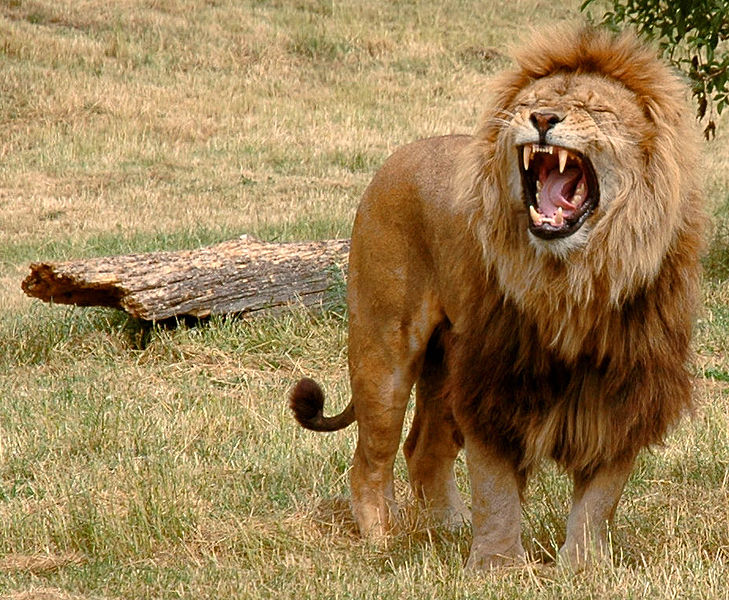
Who else would take life-sized stuffed-animal lions with removable, velcro-able manes into the Serengeti to find out why lions have manes at all? You can find out more about that one in the March issue of ASK (Arts and Sciences for Kids) magazine.
 |
| photo by Robek (source) |
Scientists look at the world around them and see things they can't explain. They ask interesting questions and design fascinating experiments in their search for an answer. They are the most curious people on the planet, second only to kids. Some are probably more curious than your average kid.
And that's what makes science so much fun.
Which is why I have a hard time understanding why our school kids, who are naturally incredibly curious people, aren't doing well in science. I don't teach in K-12, so I'm not in the classroom to know what activities they're doing to learn about science. I do know that many elementary teachers don't have a background in the sciences, and perhaps that's a contributing factor. I really don't know.
Are we not letting kids observe and ask questions? Not giving them the directed freedom to figure out how to find an answer? Kids are good at that. It comes naturally to them. Just imagine what could happen if we harnessed that potential. All it takes is a creative mind and a supportive atmosphere. Science doesn't have to be costly. Some of the best experiments are incredibly simple.
So why aren't our students performing well on science tests? Scientists are just kids who never lost their curiosity about the world. How can we help our kids keep theirs?


