Showing posts with label simplification. Show all posts

Monday, July 1, 2013

An ounce of prevention

I used to be a beekeeper. So when I learned about the 50,000 dead bumble bees in Oregon, I was disturbed. But not just because of my affinity for bees. I'm currently teaching an environmental psychology class, and we just wrapped up a unit on biopsychology and neuropsychology--the study of how internal body processes and brain function affect behavior. We specifically looked at the effect of toxins on those systems. Toxins like neonicotinoids and other pesticides.

Let's look at the big picture, shall we?

The trees in the Oregon Target parking lot were sprayed to kill off aphids, which produce a sticky substance. The trees were sprayed so that customers' cars wouldn't get drops of the sticky stuff on them. It was a purely cosmetic application of the pesticide--as opposed to applications that support food production or human health.

Tragically, those 50,000 bees likely represented over 300 colonies of bees. As Mace Vaughan of the Xerxes Society notes, "Each of those colonies could have produced multiple new queens that would have gone on to establish new colonies next year." Which means the full impact of this event will be far greater than the initial death toll.

Why should you care about a bunch of bumble bees? To start with, they're the only bee that can pollinate tomatoes. Honey bees can't do it. They're unable to shake the pollen free. But bumble bees vibrate their bodies against flowers (a process called buzz pollination), which loosens the pollen.  If you like tomatoes (and pizza and spaghetti and salsa and anything else with tomatoes in it), you need bumble bees.

Whole Foods recently made the extent of our dependence on honey bees (specifically) visual by removing all bee-pollinated items from the produce section.


Striking, isn't it? That's just honey bees. And that's just the produce section. The dairy section would be all but empty, because the alfalfa that farmers feed their dairy cattle is pollinated by bees. And then there are all the other foods that use bee-pollinated crops as ingredients. Honey nut cereal for breakfast? Forget the honey. And the nuts. No apple cinnamon anything, either.

So how did the event in Oregon happen, anyway? What is it about pesticides that people feel free to use them with abandon, even on things that can't harm us? How did it become the norm in our country to spray everything, just because it might have an insect on it?

God forbid a leaf might have a hole in it, particularly when Americans spend 90% of their time indoors and don't actually take a close look at said leaf.

But Americans happily fork over a monthly payment to the lawn care company to come and spray their yard. It's necessary for a healthy lawn, the company says.

Is it?

No.

According to the UNL Pesticide Education Office, those monthly contracts keep the company's income on even keel. That's all.

It's not for the good of your lawn. It's for the good of the company's bottom line.

Hmm.

Ever stop to think about what, exactly, they're putting on your yard when they come to spray? Or how it works? Let's take a look at the stuff they sprayed on the trees in Oregon.
 
Neonicotinoids act as a neurotoxin. Neurons work by opening and closing ion channels on the cell membrane. By shuttling ions (charged atoms) into and out of the cell at very high speed, neurons are able to "fire" or send signals to other neurons, muscle cells, or other parts of the body. Neonicotinoids work by holding those channels open. Ions continuously flood across the cell membrane, causing paralysis and death.
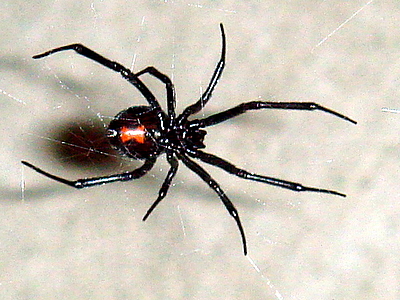
(Incidentally, black widow venom acts by causing an explosive release of neurotransmitter, which binds to ion channels, forcing them to stay open. The result is paralysis and death. Would you spray black widow venom on your yard to make it look good? I think not.)

Neonicotinoids are highly toxic and accumulate in the environment. A recent study by Dave Goulson at the University of Sussex shows that neonicotinoids have a three year half-life (that means it takes three years for half of the compound to break down). He estimates that when the compound is reapplied one year after the initial application, there is still 80% from the year before in the soil.

Bee scientists, including Marla Spivak at the University of Minnesota are calling for a change.

We need to plant pollinator gardens--everywhere. In our yards, in our cities, surrounding our farms. And those spaces must be free of pesticides. No herbicides, no insectides, no rodenticides or fungicides. All of these are toxic to the pollinators we need for our survival.

What can you do?

Join the Xerces Society's Bring Back the Pollinators Campaign: sign the pledge, then order a pollinator habitat sign to let people know what you're doing.

There is no place for cosmetic use of pesticides. Not in our lawns and gardens. Not in our cities and shopping areas.

Not any more.

Our lives quite literally depend on it.

How, then, do you prevent insect pests from destroying your garden? Biodiversity. A diverse planting attracts predatory insects that keep the pests down. It attracts birds that eat the pests. It promotes a healthy ecosystem in your yard, so that no pest species has the opportunity to reproduce to such large numbers that they can decimate your favorite plants.

And if you plant regionally native plants, you won't need to fertilize them. You'll rarely need to water them. Your garden will be both beautiful and pollinator-friendly. It will boost your immune system and lower stress.

Eliminating pesticides used for cosmetic purposes is the single easiest thing you can do to help the planet while also helping your wallet and your health.

I think it's time, don't you?

Monday, April 22, 2013

Happy Earth Day!


In case you missed it, today is Earth Day. Celebrations have been going strong all weekend long. So join in the fun!

What can you do to note just how vital the earth is to our survival? (And it really is, down to the soil you walk on and the critters that burrow in it.) Tons of things! Pick one, try it out for today, then again tomorrow--see if you can keep it up all week. Make it a habit. But at least make an effort of some kind.

Waiting in your car for a while? If you will idle for longer than 30 seconds, turn off the engine. The amount of gas your engine needs to start is equivalent to the amount used in 10 seconds of idling. Not only will it put money in your pocket (since you are burning money when you idle), it will also improve local air quality for all those people who are ...

riding bikes! Why not try a day without a car? I spent five years in Germany without a car (we borrowed one -- once). We walked, biked, rode buses and trains. And let me tell you, we were in good shape. It might have taken a little longer to get places, but we never had to go to the gym (hey look--more money in your pocket!)

Not up for a two-wheeled commute? Try carpooling. Not only will it save you money (around $650 per person if you ride with one other person each work day for a year and up to $1000 per person if you fill the car - source), but fewer cars produce less pollution and reduce your carbon footprint.

Or, if you work from home, maybe you could make some changes there.

Install a rain barrel. Climate change means more extreme weather events happening more often. Ninety degree weather in March? Two feet of snow in April? Yep. This is the new normal. And that means there will be periods of drought intermixed with heavy rain events. Rain barrels are a great way to catch some of the precipitation to use during the dry spells.

Head to your local garden center and ask for regionally native plants for your garden. they'll be better able to tolerate the extremes with a lot less input from you (they usually require little to no fertilizer, no pesticides, and little water other than what falls from the sky). Choose perennials and they'll come back year after year.

Or plant a tree! Trees not only provide shade and cool the local area, they also play a critical role in maintaining the water cycle by drawing water up from the soil and releasing it into the air. This is why rain forests are rainy--the trees literally create rain by constantly releasing huge amounts of water into the air. Areas (like the Middle East) that have long been deforested eventually become too dry to support trees, which leads to further drying and eventual desertification. Don't want your area to become a desert? Take care of those trees.

What will you do to celebrate Earth day? I'm waiting for the weekend to put in dozens of native plants, shrubs and trees. Can't wait to watch my yard transform.

Monday, May 14, 2012

Changing, growing

If you've spent any time reading this blog, you'll know I like to garden. I waited ten years to have a garden of my own (container gardening, while nice, only gets you so far). So one of the first things I did when we moved into our house last fall was to tear out the grass along our fence line and put in native grasses and perennials.

Okay, it wasn't just me. Beloved Husband and both kids helped. It was a ton of work, but well worth it, because we now have this:


The neighbors, who thought we were crazy when we started, have all commented on how much they love it. And I love that it will change as the season progresses. By mid-summer, it will have lots of yellow and orange flowers blooming, and by fall, the grasses will be tall and all shades of yellow, gold, and red, some with feathery pink seed heads.

Yesterday, I was pulling weeds (yes, I pull them by hand, more on that in a moment) to the susurrus of baby cardinals begging for food in our lilac. As long as I kept my head down, the parents were content to come and go. I also discovered a bumblebee nest behind that pinkish plant in the foreground (Penstemon, for anyone who's curious).

Weed-pulling: a back-breaking, mindless waste of time, right? Lots of people think so, but I enjoy it. (Now you know why our neighbors think we're nuts.) I like it for many reasons.
  • It's hard work, but at the end of the day, I can look at the planting bed and see the results. There's very little instant gratification in writing.
  • It's back-breaking, but in a different way from writing. it stretches muscles that sit for too long when I write, so in a way it's soothing. Besides, there's something satisfying about going to bed a bit sore from a hard day's work. And I sleep better.
  • It's mindless, which gives my brain a break from constant focus and thought. The inability to sustain focus on something for a prolonged period of time (or the increasing difficulty in doing so as time progresses) is called directional attention fatigue, and studies show that exposure to nature is the best way to allow the brain to recoup and revitalize (source).
  • It's inspirational. A good many of my magazine article and picture book ideas (the non-fiction ones) are based on things I have seen while gardening or spending time outside. Gardening is also the perfect opportunity to figure out what, exactly, that random thing that just happened in my novel really means, and how it will play out later in the story (or if I should get rid of it).
And then there are encounters like these. How can you not love seeing something like this?

eastern swallowtail butterfly
Do you garden? What do you like about it? And if not, why not?


Tuesday, May 1, 2012

Save a book (and your sanity)

Happy May Day, and congrats to everyone who completed the A to Z Challenge!

Have you seen this lovely image? I love it. Simply brilliant.

source*
*Okay, I can't provide the source for that, because someone emailed it to me. I think it's going around Facebook, and if you happen to know who created it, please let me know, so I can give them credit for it.
On a separate (yet very much related) note, did you know this week is Screen-Free Week? Yesterday marked the first day of an entire week in which kids (in particular, but everyone, really) unplug. No TV, no video games, no DVDs/NetFlix/[insert entertainment media of choice here]. It's intended primarily for children, many of whom watch over 30 hours of TV a week (an average of 32 hours per week for preschool children, and it goes up from there--that's more than four hours a day for 3 and 4-year-olds!) source.

That's a whole lot of screen time, which has been shown to increase obesity and other health problems, not to mention stifle creativity (source). So this week is all about unplugging.

What to do instead?

Get outside! It's spring, go enjoy it. Not only will it allow your brain to process something ... you know ... real, it will also reduce stress, improve your attention span (really!), and help you find a solution to that problem you've been wrestling. Check out more on the benefits of nature in this post.

Go read a book! Recent studies have shown that fiction can have extensive benefits, in particular by stimulating empathy and thereby reducing social friction. If you haven't seen this article in the Boston Globe, go check it out--it's fascinating.

Do both at the same time! You can't lose, it's like earning bonus points for your life: improved social functioning, less stress, and improved cognitive functioning all wrapped into one delicious, engaging novel read in the out-of-doors.

So, in honor of all those fallen books, let's go screenless (not completely--I know we all have work to do). Maybe our collective outpouring of empathy can ease the social friction cause by *ahem* certain television shows.

What will you read this week?

Monday, March 19, 2012

Where the wild things aren't

Where are the wild things? Not in children's books (or, to be accurate, less so with every decade that passes). So says a team of researchers who studied Caldecott winners and honor books from the past 70 years. The recent study determined that scenes depicting nature have declined steadily over time.

That's not really all that surprising, is it? It mirrors what's happening in our lives. Most children spend the vast majority of their time indoors or in built environments (e.g., cities), so why would we expect characters in books to do otherwise?

And does it really matter, anyway? As one discussant in a recent LinkedIn discussion asked, should we be disturbed by this trend?

source

I'll let you come to your own conclusions on this, but first, a few items of interest.
  • Children who live near natural settings experience less stress. (source)
  • Kids who move to greener locations demonstrate improved cognitive abilities. (source)
  • Kids with ADHD have milder symptoms when they have regular "green time"--time spent in nature. (source)
  • Symptoms of ADHD decrease immediately following a 20-minute walk through a park. (source)
  • Inner-city girls with a view of nature (e.g., trees outside their windows) have greater self-discipline and are better able to concentrate. (source)
  • Areas with trees provide better opportunities for play, and play is an important part of childhood development. (source)
  • Young children who spend time in "outdoor classrooms" have longer attention spans and better motor coordination than children who spend only short periods of time outdoors. (source) 

source
What if you're all grown up, or don't suffer from ADHD? Not to worry, nature affects adults, too.
  • People living in green areas are less likely to procrastinate, find their problems less overwhelming, and are better able to overcome them. (source)
  • People living in housing near green areas (trees and grass) are less likely to be involved in domestic violence. (source)
  • People living in areas with more natural settings are healthier. (source)
  • Patients with a view of natural scenery recover faster from surgery and request less pain medication. (source)
  • College students with natural views outside their dorm windows are better able to concentrate. (source)
So what do you think? Do you think there's reason for concern?

Thursday, April 7, 2011

F is for Follow Faster

One of the things that drives me crazy about blogging is the unbelievably slow process of following and commenting. I don't know if it's the time of day, the pull of the moon on the electrons flowing through the computer, or frequent storms of vermicious knids, but I quite often find that when I want to follow a new blog, Blogger won't let me. If it does, I am required to wait at least fifteen minutes for said request to process, and I usually give up before it finishes.

But guess what? I found a shortcut. And it works for following Wordpress blogs, so all the blogs you follow can be in one place, rather than having some posts showing up in your inbox. Copy the URL of the blog, then go to your Blogger dashboard and scroll down to your Reading List. Under the Blogs I'm Following tab, click on Add. Paste the URL, click Next, and you're good to go. If you choose the follow publicly option, your avatar will still show up on the person's blog, so they'll know you're there.

This takes 15 seconds, rather than 15 minutes. And then you have an extra 14 minutes and 45 seconds to write something.

Does Blogger do this to you? Or is it just me?

Monday, September 27, 2010

Piecing it all together

I'm single-parenting this week while Beloved Husband attends a conference.

First and foremost, I have to say that I have the utmost respect for single parents. Honestly, I don't know how they do it every day. I love spending time with my kids, but it's hard to give them the attention they want (and need) when I need to feed them, keep them in clean clothes, bathe them, and teach (my day job).

And then there's what I want... to spend quality time with my kids and quality time writing. Trifocal is nearing the end, and I want to get 'er done before I start traveling next month week. Gah!

So how is it possible to do anything writing-related? Well, Trifocal might be on hold for a bit, but... I started doing a bit of research for NaNoWriMo by collecting inspirational photos from magazines.

Jennifer Daiker at unedited does character collages, and Tera Lynn Childs did a vlog about character collages at WriteOnCon last month. And they got me thinking (yep, it happens sometimes)... not only can I do character collages to better understand who my characters are, I can also find great images of locations or events that I might incorporate into a story.

So this weekend, we pulled out the last two years' worth of National Geographics and went to town. I cut out anything that I thought might come in handy at some point in the future: scenery and people for my novels and cool animals that might make good subjects for a non-fiction PB. The kids got to tear out anything I didn't want that interested them (which, for the oldest, was just about everything... I listened to a constant stream of "Oh, wow, look at this!" for over an hour).

The result? I have a little box filled with inspirational bits and pieces to post on my magnetic board, so when I get back from my travels, I'll be ready to jump into NaNoWriMo. And I got to spend quality time with my kids. Win-win situations don't get much better than that.

If you have a family, how do you carve out time for family and writing?

Monday, March 15, 2010

Simplification and the gift of patience

Ever since I (re)discovered a more creative side of myself, I have found that having time to create makes me feel balanced; a lack of it frustrates me. After days of frustration (as occurs, for example, when one of the children is home sick), I feel off-balance and grumpy. This inevitably leads to feelings of guilt that I am a horrible, selfish person, since I crave nothing more than a few moments to myself to do what I want to do.

This was my mental state a few days ago—after four days without a creative outlet—when I picked up Gift From the Sea by Anne Morrow Lindbergh. I read the second chapter, "Channelled Whelk," and nearly burst into tears. She had put into words exactly what I was feeling.

Ms. Lindbergh felt pulled in multiple directions by responsibilities to her family, her household, and her social circles (the book was originally published in 1955—long before the days of twitter and facebook!). But what she craved more than anything was to be at peace with herself. And she went on to describe the importance of simplification in obtaining that peace.

She wrote of the many things she did not really need in her life, and of the innate difficulty in truly doing away with any of them. To raise a family and pursue a personal dream require, in many people's minds, a wide assortment of things, people, and methods of transport. Do you do away with the house and its assorted time-saving appliances? Do you cut out the social circles? Sell the car? How, exactly, does one simplify one's life? Clearly, there is no easy answer.

But the chapter had a wonderful calming effect on me. I took away from it the importance of being patient with oneself when not in a "state of grace" (or state of balance), and that is exactly what I need to give myself: the gift of patience. I want my creative efforts to move more quickly than they are, to become a larger part of my life, but her message soothed and comforted me, allowing me to be patient, to appreciate the small moments I had, even if they were not what I wanted.

I suppose I have taken a step in the right direction, now that I know what makes me feel off-balance... for many years I felt that way without knowing why. But now I have found the creative piece of the puzzle that restores my state of mind, and that is an incredibly important first step toward a state of "grace."